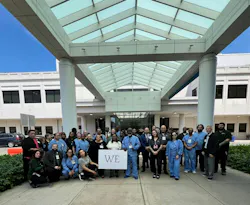
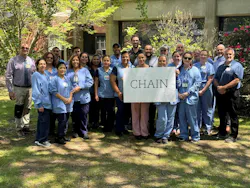
2026 Supply Chain Department of the Year: Hartford HealthCare

At many healthcare organizations, supply chain still operates largely behind the scenes, responsible for sourcing products, negotiating contracts, and ensuring clinicians have what they need when they need it. Hartford HealthCare sees the role very differently.
For Hartford HealthCare, supply chain is not simply an operational support function. It is a strategic enterprise capability tied directly to financial stewardship, clinical performance, patient access, operational resilience, and long-term system transformation.
That philosophy, combined with measurable enterprise-wide impact, helped earn Hartford HealthCare recognition as HPN’s 2026 Supply Chain Department of the Year.
The organization’s submission stood out not only because of the scale of its accomplishments, but because of how comprehensively supply chain has been integrated into the health system’s broader strategy. Hartford frames supply chain as foundational to its mission of becoming “the most consumer-centric health system in the nation.”
It is a model that goes well beyond traditional purchasing.
Hartford HealthCare’s supply chain organization spans clinical integration, analytics, operations, expense management, support services, transportation, capital planning, governance, and leadership development. The scope includes more than 30 teams and more than 4,500 supply chain-related initiatives and services across the enterprise.

The results are significant:
- $91.4 million in cost reductions in FY2025.
- More than 50% price reductions in key commodity categories.
- 99.1% OR procedural inventory accuracy.
- 99.9% consolidated service center inventory accuracy.
- More than $556 million directed to local suppliers.
- More than 161,000 concierge inquiries managed, with 85% resolved in less than 24 hours.
But Hartford leaders emphasize that the story is not about numbers alone.
“This is not episodic improvement; it is enterprise ownership, embedded in how the system operates every day,” said Milrose Mercado, senior vice president, supply chain and support services, and chief procurement officer at Hartford HealthCare.
From supply function to strategic engine
One of the clearest themes emerging from Hartford HealthCare’s transformation is the evolution of supply chain from transactional service provider to enterprise strategic partner.
Many healthcare organizations continue to separate supply chain from clinical and executive decision-making. Hartford intentionally dismantled those silos.
By integrating clinical partnership, advanced analytics, governance, and financial stewardship into a unified operating model, Hartford built a supply chain organization capable of influencing decisions far beyond procurement.
That transformation required both operational redesign and cultural change.
The organization embedded supply chain expertise directly into clinical workflows and executive leadership structures. Rather than functioning downstream from physicians and operational leaders, supply chain became part of the decision-making process itself.
The shift is especially evident through Hartford’s Clinical Care Redesign (CCR) initiative, which aligns clinicians, physicians, finance leaders, and supply chain teams around operational standardization, utilization management, and evidence-based purchasing decisions.

According to Hartford, CCR now represents more than 60% of the system’s total cost reductions and is jointly led by executive clinical and supply chain leadership.
That structure is intentional.
Rather than positioning supply chain initiatives solely as cost-saving exercises, Hartford frames them as clinical and operational improvement efforts tied to patient outcomes, affordability, and care consistency.
Defining a consumer-centric supply chain
For Hartford HealthCare, “consumer-centric supply chain” is not simply a strategic phrase. Leaders say it directly shapes how care is delivered, experienced, and supported across the enterprise.
For patients, that means affordability, reliability, and a more seamless care experience. Hartford leaders point to the organization’s cost reductions and price reductions in key commodity categories as examples of how supply chain strategy can directly support lower costs of care.
Patients also experience fewer disruptions because of strong operational coordination, dependable access to supplies, and integrated support services such as transportation, meals, and concierge support.
For clinicians, the focus is on reducing friction and strengthening confidence in the system. Leaders say clinicians benefit from coordinated operations, strong inventory accuracy, and tools that help inform decision-making without disrupting workflows.
For operational leaders, the supply chain organization functions as a strategic engine providing oversight, analytics, and enterprise-wide visibility into performance and decision-making.
Ultimately, this is how Hartford HealthCare fulfills its promise to be the most consumer-centric health system in the nation by making care more accessible, affordable, and consistently excellent, Hartford leaders explained.
Building analytics that clinicians trust
Perhaps the most distinctive aspect of Hartford HealthCare’s transformation is its internally developed Procedural Insights platform.
In an era where health systems increasingly invest in large-scale analytics infrastructures and enterprise business intelligence platforms, Hartford took a different approach.
The organization built its own physician-facing procedural analytics platform using native Epic OR supply data, standard Python workflows, and portable HTML architecture.
But Hartford leaders emphasize that the innovation is not the technology itself.
“The innovation isn’t flashy technology,” said Dan Pak, a Hartford HealthCare leader involved in the platform’s development. “It’s disciplined design and operational insight.”
The platform was designed specifically to foster trust and actionable clinical dialogue rather than impose mandates.
“Clinical variation work fails the moment it feels like a mandate,” Mercado explained. “The moment a dashboard tells a physician they’re an outlier and need to stop doing something, the conversation ends and the data gets dismissed.”
Instead, the platform surfaces variation data, peer medians, and procedural comparisons while allowing physicians to interpret the information within the context of their own patient populations and practice patterns.
“That distinction matters because the goal isn’t compliance, it’s alignment,” Mercado said. “When physicians own the interpretation, the standardization decisions that come out of it stick.”
The decision to build the platform internally was driven largely by flexibility, speed, and practicality.
Hartford leaders said internally developed architecture allowed the organization to define its own procedural taxonomy, customize variation logic for individual service lines, and rapidly deploy updates without relying on outside vendors or development cycles.
“We are also not paying for more tools,” Mercado noted. “HTML output gives us infinite flexibility in how we visualize data, with no licensing fees, no web storage costs, and no servers to deploy or maintain.”
The organization also prioritized speed and usability.
“Shipping a dashboard is measured in hours instead of weeks, and updates happen in minutes — not the next development cycle,” Mercado explained.
The results were immediate.
The first cardiovascular deployment identified approximately $9.7 million in move-to-median opportunity, with some high-volume procedures showing supply cost variation ratios exceeding 10-to-1.
More importantly, Hartford demonstrated that meaningful innovation does not always require large-scale technology investments.
Sometimes it requires operational focus, workflow understanding, and organizational trust.
Governance that extends beyond savings
While many organizations highlight cost reductions in supply chain transformation stories, Hartford HealthCare places equal emphasis on governance and sustainability.
That focus may be particularly relevant for healthcare executives navigating ongoing financial pressures, margin compression, and operational uncertainty.
Hartford’s Expense Management 2.0 strategy elevates expense management from a tactical initiative to what the organization describes as a “core enterprise capability.”
The system’s governance structure includes:
- Enterprise-wide initiative tracking.
- Budget-integrated savings validation.
- Monthly operational and finance alignment reviews.
- EVP-level accountability structures.
- Post-implementation reviews conducted six to 12 months after deployment.
The goal is not simply identifying opportunities, but ensuring accountability and sustainability over time.
“All expenditures $250,000 and above are validated against defined criteria,” Mercado noted.
This level of operational rigor is increasingly important as health systems face heightened pressure to demonstrate measurable return on investment for both operational and technology initiatives.
Hartford’s leaders appear acutely aware of that challenge.
The organization’s governance model is designed to ensure that approved initiatives continue delivering expected outcomes well after implementation. Savings are not treated as one-time wins; they are operationalized into ongoing financial stewardship processes.
That discipline may be one of Hartford’s strongest differentiators.
Many organizations can generate isolated savings projects. Sustaining enterprise-wide accountability across multiple regions, institutes, service lines, and executive teams is far more difficult.

A culture built on ownership and accountability
Hartford leaders describe the organization’s supply chain culture as one grounded in enterprise ownership, accountability, measurable outcomes, and disciplined execution.
“This is an outcomes-focused culture, where success is not measured by activity but by impact,” Mercado said. “Teams are accountable for delivering tangible results that advance affordability, clinical excellence, and system performance.”
That accountability extends well beyond traditional supply chain boundaries.
According to Hartford leaders, the organization operates not as a support function, but as a strategic enterprise capability responsible for value creation across financial, operational, and clinical domains.
The organization also emphasizes consistency and operational discipline through standardized governance structures and a unified operating model.
Innovation, leaders say, is pursued pragmatically.
“Tools like the Procedural Insights platform demonstrate how the team builds simple, high-impact solutions rooted in operational reality,” Mercado said.
Local sourcing and community impact
Another compelling aspect of Hartford HealthCare’s strategy is the organization’s focus on community impact and local supplier engagement.
In FY2025, Hartford directed more than $553 million toward local suppliers, reinforcing both sourcing resiliency and regional economic development.
Hartford leaders say local partnerships improve resiliency by reducing dependence on distant or fragile supply networks while strengthening communication, flexibility, and response capabilities during disruptions.
“These partnerships also drive meaningful economic and social benefits,” Mercado said. “By investing heavily in local businesses, Hartford HealthCare acts as an anchor institution, supporting job creation, business growth, and economic stability.”
The organization also views local sourcing as part of its broader commitment to health equity and community wellbeing.
“By investing locally, Hartford HealthCare strengthens operational performance while contributing to healthier, more resilient communities,” Mercado said.
Developing the next generation of leaders
Hartford HealthCare’s Supply Chain Leadership Program (SCLP) adds another important dimension to the story: sustainability.
Rather than focusing exclusively on current performance metrics, Hartford is actively investing in future leadership development.
The organization created SCLP because leaders believed traditional development programs were not adequately preparing supply chain professionals for the increasing complexity of modern healthcare systems.
The program provides:
- End-to-end operational and clinical exposure.
- Executive mentorship.
- Enterprise strategy involvement.
- Real-world decision-making experience.
- Capstone projects presented directly to executive leadership.
That investment reflects a growing reality across healthcare that future supply chain leaders will require broader skill sets than traditional procurement expertise alone.
Hartford appears to be building intentionally for that future.
A model reflecting healthcare’s next phase
Ultimately, Hartford HealthCare’s Supply Chain Department of the Year recognition reflects more than operational excellence.
It reflects the changing role of healthcare supply chain itself.
The most advanced organizations are no longer viewing supply chain primarily through the lens of purchasing efficiency. They are integrating supply chain into enterprise transformation efforts tied to clinical quality, financial sustainability, patient experience, workforce development, and operational resilience.
Hartford captures that evolution clearly.
“This is supply chain reimagined, not as theory and not as aspiration, but as a proven engine of access, affordability, excellence, and health equity,” Mercado concluded.
For healthcare leaders across the industry, the broader takeaway may be just as important as Hartford’s individual accomplishments.
Supply chain is no longer adjacent to healthcare transformation.
Increasingly, it is central to it.