Six Blind Spots That Weaken Healthcare Supply Chain Resilience
Key Highlights
- Supply disruptions often originate from decisions made long before a backorder notice, such as product design and vendor contracts.
- Over-reliance on disposable products and proprietary ecosystems can reduce flexibility and increase vulnerability during shortages.
- Balancing cost savings with resilience requires evaluating product lifecycle, reprocessing options, and vendor dependencies.
- Clinical standardization and vendor relationships can unintentionally limit product alternatives, impacting supply chain flexibility.
- A comprehensive resilience strategy involves multiple enterprise departments to address structural vulnerabilities and preserve clinical choices.
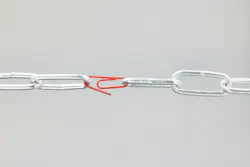
A supply disruption rarely begins when a hospital receives a backorder notice. It often begins much earlier—in the design of a device, the terms of a contract, the decision to standardize on one vendor, or the retirement of a reusable product. By the time a critical item becomes unavailable, many of the decisions that magnify the shortage have already been made.
That is why the healthcare resilience discussion must extend beyond emergency sourcing and supplier performance. Mapping upstream suppliers, developing business continuity plans, improving disruption alerts, monitoring backorders and recalls, and creating redundant sources are all essential. They help organizations see risk sooner and respond with greater discipline.
But those practices address only part of the problem. A health system can have excellent visibility into a fragile supply chain and still remain fragile. Product design, clinical standardization, portfolio strategy, contracting, sales practices, and lifecycle decisions can all reduce the number of practical alternatives available when a disruption occurs. Many of those decisions sit outside the traditional authority of the supply chain department.
The efficiency trap
Since the pandemic, hospitals have faced repeated shortages and allocations affecting medical devices, pharmaceuticals, and other products needed for patient care. Purchasing teams may find a substitute on paper, only to discover that clinicians are not trained on it, related equipment is incompatible, or the contract makes switching prohibitively difficult. A backorder can quickly become a clinical operations problem.
For decades, healthcare organizations have been rewarded for removing cost from the supply chain. Inventories were reduced, vendors were consolidated, and contracts were standardized to improve efficiency and lower acquisition costs. While those strategies generated meaningful savings, they also reduced flexibility. A supply chain optimized primarily for unit price often has fewer options when disruption occurs.
Sole-source agreements and proprietary technology platforms illustrate the tradeoff. Lower prices or enhanced functionality may come in exchange for greater dependence on a single manufacturer, product family, or technology ecosystem. Health systems may offset rising costs through staffing reductions or other efficiency measures, but those savings do little to restore the flexibility lost when switching products becomes difficult or impractical during a shortage.
The Symplr State of Healthcare Supply Chain Survey reflects this collision of priorities. Respondents identified cost savings as their leading challenge in 2024, supply disruption as the leading challenge in 2025, and both issues at the top in 2026. The message is not that cost discipline should disappear. It is that savings and resilience must be evaluated together rather than treated as separate objectives.
Lean supply chains perform well under normal conditions. Their weakness appears when normal conditions vanish, whether because of a pandemic, geopolitical conflict, severe weather, transportation problems, or constraints on raw materials. Health systems did not create every vulnerability in the healthcare supply chain, but years of aggressive cost reduction have contributed to an operating model with fewer cushions and fewer choices.
The common thread is that many of these vulnerabilities originate well before a purchasing team receives notice of a disruption.
Resilience is an enterprise-level issue
Healthcare supply chain resilience is the ability to maintain patient care when the flow of medical products is interrupted. Traditional resilience programs rightly focus on supplier mapping, continuity planning, communication protocols, inventory strategy, alternative sources, and service-level reporting. These activities strengthen the logistical and contractual connection between a provider and its suppliers.
The larger risk landscape also includes decisions made in product development, clinical practice, capital planning, value analysis, legal review, sustainability programs, and executive strategy. A product may be readily available today while its design or contract quietly eliminates alternatives for tomorrow. Six commonly overlooked areas deserve a place in every health system's resilience assessment.
1. Disposable-by-Design Products. Single-use products are appropriate in many clinical applications, but the category has expanded to include devices that previously were reusable or that can be safely reprocessed. Cables used in an electrophysiology lab are one example. When a disposable product is on backorder, each procedure consumes one of a finite number of remaining units. When reusable or reprocessable products are part of the model, an existing inventory can continue circulating even while new supply is constrained.
This distinction affects more than availability. A greater reliance on disposable products can increase procedure costs and waste while creating a direct link between factory output and the hospital's daily capacity. Yet sourcing and value-analysis processes do not always credit reusable, reprocessed, and alternative sourcing strategies for the resilience they provide.
2. Obstacles to Reuse and Reprocessing. Manufacturers naturally promote their newest products, but commercial practices can also discourage hospitals from extending the useful life of devices. In some settings, representatives remove products after procedures, condition technical support on the use of new devices, or use volume commitments to steer facilities away from reprocessed alternatives.
Take-back and recycling programs can create a similar issue. Recycling may sound like the environmentally preferable option, but removing a device from circulation can prevent reuse and eliminate the supply continuity benefit that reuse provides. A sustainability program should consider the full hierarchy of options, including whether a product can remain safely in service before it is converted into raw material.
3. Product Lifecycles. Rapid innovation can improve care, but a faster cadence of product introductions also creates risk. Each generation may bring a price increase, while the previous generation is supported less actively or made incompatible with newer equipment. Hospitals that adopt a new technology early may have few equivalent products available if supply falters.
Newness can therefore carry a resilience premium that is rarely included in the purchasing decision. Before standardizing on the latest generation, organizations should ask how many substitutes exist, whether the prior version will remain supported, and what operational changes would be required to switch.
4. Closed Technology Ecosystems. Many medical products function only with other assets from the same manufacturer. An ultrasound catheter may work with only one vendor's generator, software, connectors, and accessories. Once a service line is built around that ecosystem, replacing a single unavailable component can become impossible without changing the entire platform.
This type of dependence is designed into the product architecture, not created by a purchasing team's failure to negotiate. By the time supply chain leaders encounter the issue, clinical workflows and capital investments may already be locked in. Interoperability and open-platform design should therefore be evaluated as resilience attributes during technology selection.
5. Commercial Influence on Clinical Standardization. Training, technical support, clinician relationships, consulting arrangements, product access, and opaque pricing can all shape utilization within a service line. These relationships may provide legitimate clinical value, but they can also narrow the range of products that clinicians are comfortable using and make a competing option difficult to introduce during a shortage.
Resilience requires more than having a substitute listed in a catalog. The alternative must be clinically acceptable and contractually available. Health systems should examine how vendor relationships influence standardization and ensure that clinical preference does not quietly become irreversible supplier dependence.
6. Bundles That Exchange Savings for Flexibility. Bundling is common in healthcare contracting. A lower price on one product may depend on purchasing another. Capital equipment may be provided at little or no upfront cost in exchange for a disposable-volume commitment. Access to certain products or technical support may be conditioned on broader utilization of the supplier's portfolio.
Some arrangements may raise legal or compliance questions. Even when permissible, they can create operational vulnerability by tying multiple categories to a single vendor. The apparent savings on one line item may be offset by higher costs elsewhere and by the difficulty of changing products when supply is interrupted. Bundles should be evaluated for their total financial effect and for the concentration risk they introduce.
A wider governance model
The purpose of resilience is to preserve the hospital's ability to treat patients when conditions become difficult. That responsibility is too broad to reside with supply chain professionals alone.
Health systems should elevate resilience to the enterprise level and involve supply chain, clinical leadership, value analysis, finance, legal, sustainability, information technology, and executive management. Product selection and contracting decisions should account not only for acquisition price and current performance, but also for substitutability, interoperability, lifecycle stability, reuse potential, and vendor concentration.
A resilient supply chain is not built only by reacting faster to shortages. It is built by preserving choices before a shortage occurs. Until healthcare organizations examine the structural decisions that create dependence, they will continue treating the symptoms of fragility rather than reducing its source.
About the Author
 Lars Thording, PhD
Lars Thording, PhD
Lars Thording, PhD, has a background in academia, consulting and industry leadership. He has been responsible for the launch of numerous market-disrupting solutions across healthcare, insurance and technology. Originally from Denmark, Lars has taught at universities in Denmark, Ireland and the United States. He currently serves as the vice president of marketing and public affairs at Innovative Health, a medical device reprocessing company specializing in electrophysiology and cardiology technology. Lars currently serves on the board of the Association of Medical Device Reprocessors.