OR/SPD Power Duos: Inside Two Children’s Hospitals Redefining Surgical Collaboration
Sterile processing and surgical services are inextricably linked. Yet in many organizations, the sterile processing department (SPD) and operating room (OR) still function at arm’s length, interacting mainly when something goes wrong.
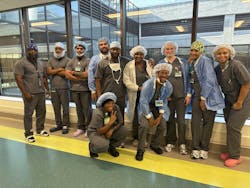
Two children’s hospitals are working differently. At Ann & Robert H. Lurie Children’s Hospital of Chicago and Nemours Children’s Hospital in Wilmington, Del., leadership “power duos” spanning perioperative services and SPD are building intentional, structured collaboration that reaches from the C-suite to the frontline.
Their efforts demonstrate how organizations can move beyond blame, align around shared goals, and improve safety and efficiency for surgical patients.
Why collaboration matters: patient safety, reliability, and compliance
Both organizations describe collaboration between the SPD and OR as foundational to surgical operations and critical to patient safety.

“At the backbone of every hospital and every operating room is sterile processing. If the SPD shuts down, there will be chaos,” said Nemours Children’s Hospital Sterile Processing Department Manager Kwame Addomah Gyabaah, MHA, Mini MBA, BS, ACHE, CHL, CER, CIS, CRCST.
Nemours Children’s Hospital Assistant Vice President, Perioperative Services & SPD (Delaware Valley) Edna Gilliam, DNP, MBA, RN, CNOR, NEA-BC, emphasized the interdependence of perioperative workflows.
“Our processes are so interconnected that neither department can operate in a silo or succeed alone. We need transparent and collaborative conversations so we can work together to provide the best possible care for our patients.”
At Lurie Children’s Hospital, Senior Director of Surgical & Procedural Services John Olmstead, MSN, MBA, CNOR, FACHE, noted the clinical risk associated with reprocessing failures. “There’s nothing more dangerous in healthcare than reusing a reusable device that isn't sterile and literally injecting a germ into the patient.”
Lurie Children’s Director of Procedural Care - Surgical Services, W. Zeh Wellington, DNP, MSN, RN, NE-BC, added that the stakes are inseparable from the hospital’s mission. “Every instrument we touch has a direct connection to a child on an operating table. Collaboration isn’t optional. It's instrumental. It’s how we protect our patients with every tray, every instrument, every scope.”
Olmstead also pointed to the regulatory drivers for collaboration given that The TJC (The Joint Commission) and state health agencies have intensified their focus on SPDs because of the high risks associated with reusable devices.
“Regulators are really getting into the finer details of sterile processing because of its complexity and criticality to the safe provision of care,” he stated. “Their goal is patient protection, not citation quotas. Therefore, it is incredibly important for OR and SPD leaders to frame compliance not as a burden but as a shared responsibility to protect vulnerable patients.”
While each hospital began from a different starting point, both leadership pairs built collaboration through consistent structure, shared ownership, and a relentless focus on safety. Their approaches reflect two distinct but equally effective models.

Power Duo #1: Lurie Children’s – embedding collaboration in daily practice
When Wellington joined Lurie Children’s, he made “intentional collaboration” a priority from the outset. “Historically, SPD and OR departments have operated in silos,” he said. “But when children come to our hospital at their most vulnerable time, they don’t know this department or that department — they just know they are having surgery.”
“It’s very easy to become ‘us versus them’ on both sides – the SPD and the OR,” said Olmstead. “It's not, ‘can you afford to take time to make a collaborative team?’ It's more of “can you afford to not take time to do it?’ Because it's so critical that we get this right.”
Working closely together, Wellington and Olmstead, have implemented structured practices that require the two teams to plan and problem-solve together.
Regular rounding and team huddles
Wellington rounds in both the OR and SPD each morning for team huddles to discuss patient safety, instrumentation, bioburden findings, and follow-up actions. The emphasis is on shared accountability, as he explained:
“I ask the teams, ‘What would happen if bioburden was discovered on an instrument in the OR? What if this was your child, parent, or other loved one?’ We view all patients as our family members. When they’re on that table in the operating room, we're committed to taking care of them. Whether you’re an SPD technician working in decontam, sterilization or prep and pack, an OR scrub technologist, or a nurse circulating in the operating room – you’re all part of that surgery.”
“We perform a lot of audits to ensure we are catching bioburden, and ensure our tools and supplies are top notch,” he continued. “When things sometimes happen, we want to identify them, have a corrective plan, rectify them, and make sure things are done properly going forward. Regular rounding and team huddles help us continue this constant focus on success.”

Shared experiences
Wellington and Olmstead provide their team members with cross training opportunities. OR team members spend “a day in the life of the SPD” to understand what happens to instruments after a case, and in turn, SPD team members will spend a “a day in the life of the OR” to understand how the instruments they reprocess are used.
Visits to the SPD also extend to the surgeons and the C-suite.
“Zeh spends a lot of time with our surgeons and one of our favorite things is when he takes a surgeon up to see our SPD because they don’t know what to expect,” said Olmstead. “It's a total eye opener for them.”
“As a result of a lot of hard work and dedication on John’s part, our C-suite has always been very supportive of the SPD,” said Wellington. “Every time I have invited them for a visit, they come down from their offices to the ninth floor where our department is located.”
The DRILL - daily multidisciplinary case review
Wellington developed a standardized process called “Daily Review of Next-Day Cases” (DRILL) where SPD and OR professionals participate in daily calls to review upcoming cases and instrument needs.
During the DRILL process, they identify potential back-to-back tray conflicts, workflow constraints, or other issues that could necessitate use of immediate use steam sterilization (IUSS) or accelerated cycle/rapid sterilization, practices that Wellington and Olmstead have committed to eliminating.
DRILL
1) Daily review of next day cases and turnover needs of trays/ instrumentation
2) Rearranging schedule to eliminate need for quick turnover
3) Input from surgeon of specific needs for the case
4) List of one-of-a-kind trays – reorder additional trays if need persists
5) Look over and review all preference cards
Wellington’s early identification of pressures allows the team to adjust schedules, reallocate trays, or procure additional inventory to ensure reprocessing windows are safe and compliant.
Frontline-driven improvements
Wellington and Olmstead emphasized the importance of engaging SPD professionals directly in problem-solving.
“If you want to know how to solve a problem, ask the frontline,” Wellington said. “They know the innovations we need — our job is to act on them and give them credit.”
One recent improvement came from a long-tenured SPD technician who identified a persistent workflow risk. During routine rounding, Wellington and Olmstead asked her what issue she would address if she could change one thing in the department.
“She explained that nurses often came into SPD and walked straight into prep and pack,” Wellington said. “That created a risk that someone might inadvertently pull a tray that wasn’t fully processed or hadn’t undergone the final check required before it could be transported to the OR.”
The technician proposed a simple, high-impact solution: a clearly defined boundary marking where staff must pause before entering the prep-and-pack area.
“She said, ‘I wish we had a red line on the floor so people know where to stop,’” Wellington recalled. “John was like, ‘Let’s do it, Wellington.’”
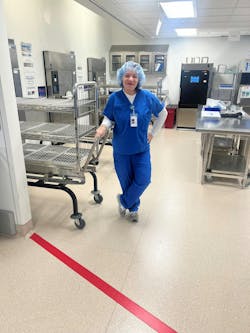
Wellington and Olmstead acted immediately, calling for installation of a line of red floor tiles to distinguish the general-access area from the restricted prep-and-pack zone. Anyone entering now must stop and request permission, ensuring an SPD technician can escort them and verify trays are safe, complete, and ready for use.
The change reduced unnecessary traffic, protected workflows, and reinforced SPD’s role in maintaining sterile integrity.
“When frontline staff bring forward ideas like that, it's our responsibility to implement them,” Wellington said. “Those insights are part of the secret sauce of SPD success.”
Meaningful, measurable results
The collaboration between the SPD and OR team led and fostered by Wellington and Olmstead, and the new practices implemented have contributed to greater patient safety and cost savings.
Clear operational and quality outcomes include:
- IUSS (aka flash) sterilization virtually eliminated
- IUSS sterilizers removed from service, saving more than $20,000 annually in maintenance costs
- Use of an accelerated cycle/rapid sterilization method reduced to zero
“We have worked collaboratively – the SPD and OR teams – to essentially eliminate flash (IUSS) sterilization,” said Olmstead. “I can't remember the last time somebody had to flash something. And over the past year, there has been zero use of accelerated cycle/rapid sterilization, which is almost unheard of.”
Shifted perceptions of SPD
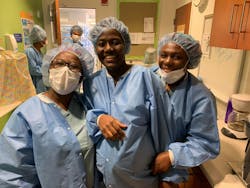
Mutual respect between the SPD and OR teams, ongoing collaboration, and shared problem-solving have helped shift the narrative at Lurie Children’s from “SPD as a problem source” to “SPD as a partner.”
Olmstead said that a critical component of this shift has been how leaders respond when issues arise.
“You can’t punish a service into excellence,” Olmstead said. “You can’t shrink yourself to greatness. You can’t cut yourself into high quality. And ‘throwing darts’ — firing people, threatening them, blaming them — has never improved a single process. You can create turnover, but you can’t threaten people into excellence.”
Instead, the Lurie Children’s team uses coaching, structured accountability, education, and recognition to build both competence and trust. This approach, combined with the elimination of IUSS and rapid sterilization, has allowed the infection prevention team to evaluate cases holistically rather than defaulting to SPD as the presumed source of problems.

Power Duo #2: Nemours Children’s — building ‘one team’ through structure and culture
When Gilliam arrived at Nemours six years ago, she noted how there was a “clear divide between OR and SPD” and described the relationship between the two teams as “tense” and “negative.”
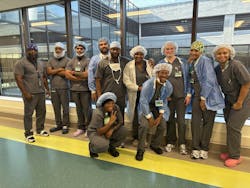
“When SPD became a part of my oversight, we worked really hard to create a ‘one team’ kind of perspective,” she stated.
Gyabaah joined Nemours four years later. Having been employed by other hospitals that lacked alignment between SPD and OR, it came as no surprise to him that he and Gilliam had to work on relationship building between the teams to strengthen this ‘one team’ approach.
“Once the relationship is built, you should get the feeling that they're here to help you and not to point fingers and point out your faults,” said GyabaahhGyabaah.
They partnered to deliberately align structures, workflows, and communication across departments.
Mirrored leadership roles
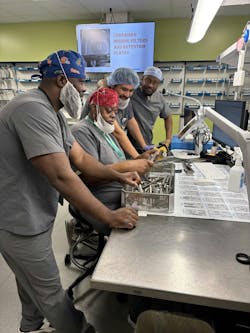
They created lead SPD technician roles designed to mirror the OR’s lead surgical technicians. The OR’s lead surgical technicians, who serve as liaisons between surgeons and perioperative staff, are paired with lead technicians in SPD assigned by specialty or service. Each specialty now has a designated partner on both sides, establishing direct, reliable communication channels for instrument questions, specialty set needs, and emergent issues.
“The whole goal of that was to give each clinical service a clear point of contact in both departments they could communicate with,” said Gilliam. “So, if the OR is missing instruments or ordering instruments, they know the person to call in SPD for input on these matters. That has really opened the doors for communication and collaboration.”
Daily huddles and transparent communication
SPD and OR teams meet daily to discuss what worked well and what requires follow-up. Lead OR technicians regularly spend time in the SPD and lead SPD technicians in the OR.
“Transparency is the number one word that I use in terms of benefit,” said Gyabaah. “We try to be transparent with each other. We are curious and ask questions of each other such as, ‘What could we be doing differently?’ Conversations like that keep the communication open and reinforce that we are one team.”
Tray quality committee
After identifying some trending tray quality issues in the SPD, Gilliam and Gyabaah formed a tray quality committee led by SPD technicians, OR representatives, and a perioperative quality and safety specialist. The members meet every morning to review issues in real time, identify trends, and drive corrective action.
“One thing I love about this committee is we can identify when an issue is repeating itself, dig in, and get to the root cause of it – where it's coming from and what is causing it,” said Gyabaah. “It's helped us a lot to pinpoint what we need to change in our department and in the OR as well.”
“Sometimes, if something happens that same day, we tackle it immediately,” he added. “We record all identified issues, and for those that aren’t urgent, we review them at the end of each month to uncover where they originated and develop corrective actions.”
Bioburden reduction
Gyabaah has also implemented a highly visible, data-driven approach to tracking bioburden events. He uses what he has defined as the “360 rule” — a tray that leaves the OR, passes through the full SPD reprocessing cycle and returns to the OR still containing tissue, blood, or other soil, where it is then identified by the surgical team.
The team records each 360 event and maintains a running count of days without such an occurrence on a board in the department. Any new event resets the count to zero. Recently, Nemours reached 97 days with no bioburden; the team plans to formally recognize staff when they hit 100 days.
“To date this year, we have only had five 360 events,” said Gyabaah. “When something goes wrong, we circle back, meet as a team, brainstorm, and move forward from there. That’s gone a long way to help us in sterile processing and periop – and the benefits are passed along as great outcomes for our patients.”
Supporting technicians with education and recognition
To support technicians, Nemours uses a point-based algorithm tied closely to education. For example, if an SPD technician forgets to add a filter to a tray, the event is logged, and the SPD educator becomes involved at each escalation step. Corrective action is reserved for cases where coaching and education have been provided over time.
Gilliam says this approach, along with the presence of a perioperative quality and safety specialist, has led to an increase in event reporting — a positive sign.
“When they don’t report, we don’t know there’s an issue to be fixed,” she said. “Now we’re getting the incident reports, and we understand our opportunities. We’ve seen our bioburden drop, and staff can see the success of their work.”
Recognition is equally emphasized and intentionally built into the culture. Nemours supports a clinical ladder for SPD, shares the costs for sterile processing certifications, and encourages SPD staff to pursue infection prevention certification to further strengthen their influence on quality and safety.
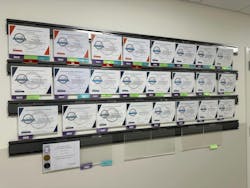
Gilliam, Gyabaah, and the department of surgery host a white coat ceremony for SPD professionals who earn all four sterile processing certifications. When an individual attains this level of certification, they are presented a personalized white lab coat during a breakfast attended by members of the hospital’s executive leadership team who celebrate their achievement.
Commenting on this practice, Gilliam stated, “We want them to feel valued as clinical partners.”
Leveraging the power of data
Gilliam and Gyabaah’s collaborative work – and successes – are grounded in transparent data and reporting.
“Communication is the start of collaborative SPD/OR improvements but it cannot be the only factor,” said Gyabaah. “To snap out of the ‘blame game,’ you need reliable and consistent metrics that both teams acknowledge as the source of truth.”
“Let’s say you have a surgeon who claims every tray he receives from the SPD has an issue,” Gilliam added. “When you can show them the data to prove tray issues do not happen ‘all the time’ – metrics that prove out of the 20,000 trays the SPD processed in the past month, only five had issues – that reframes the conversation and interaction.”
Conclusion
The “power duos” at Lurie Children’s and Nemours Children’s show that strong SPD/OR collaboration is achievable and sustainable. By aligning leadership, hardwiring communication into daily workflow, using data constructively, and elevating the clinical role of SPD, these organizations have improved reliability, quality, and culture across the surgical continuum.
Their experiences offer a practical roadmap for any facility seeking to strengthen SPD/OR partnerships and enhance surgical safety.
QUICK START GUIDE: Ten Proven Strategies to Strengthen SPD/OR Collaboration
Actionable insights from two children’s hospitals that transformed teamwork across sterile processing and surgical services.
1. Align Leaders Around Shared Goals
Begin with the OR and SPD leadership teams. Establish expectations for transparency, accountability, and shared ownership.
“It really must be a top-down strategy,” said Olmstead. “It takes physical, intentional steps.”
Gilliam added: “The first step is letting go of defensiveness. This isn’t punitive — these are issues we need to fix together.”
2. Increase Cross-Department Visibility
Cross-department visibility strengthens understanding and respect. Invite surgeons, nurses, and leaders to observe SPD workflows, and have SPD shadow staff in the OR to build appreciation for each team’s complexity.
“When we spend time in each other’s spaces, we really see what the other team is up against,” Gyabaah said. “That goes a long way toward building one team.”
“It’s a total eye-opener when surgeons see the SPD in action,” Olmstead said.
3. Make Collaboration Routine, Not Reactive
Institute daily touchpoints that occur regardless of issues: huddles, rounding, and case-review calls. Committees like tray-quality review groups help identify trends and drive improvements.
“That’s why I round in the OR and SPD every single morning,” Wellington said. “These daily touchpoints keep us aligned on safety. We’re not waiting for problems — we’re talking about what’s coming next and how to prevent issues before they happen.”
“Our teams meet every day to know what’s going on — what we did right today, what we can improve, and how to be better the next time,” Gyabaah said. “Keeping that daily dialogue going is a great thing for both departments.”
4. Communicate Beyond Problems
Positive reinforcement and proactive updates build trust.
“You can’t just show up when something breaks,” Olmstead said. “If the only messages people hear are negative, you lose them. You build a team by recognizing what’s going well and coaching from there.”
“It can’t only be about pointing out issues,” Gyabaah said. “We ask questions, we share what went well and where we can improve. That balance helps the team feel supported, not singled out.”
5. Engage Frontline Champions
Frontline champions serve as bridges between leadership and staff, helping translate expectations, reinforce culture, and maintain momentum during change.
“Champions are important because they are the informal leaders,” Gilliam explained. “Their enthusiasm spreads.”
6. Empower and Recognize the Frontline
Empowerment goes beyond communication — it means involving frontline staff directly in shaping workflows, surfacing risks, and designing solutions. Leaders at both hospitals stressed that meaningful improvement accelerates when those doing the work have a voice in how it evolves.
“If you want to solve a problem, ask the frontline,” said Wellington. “They know the innovations we need. My job is to listen, act on their ideas, and give them the credit.”
Gyabaah emphasized the value of inviting staff into continuous improvement conversations.
“We’re always asking our staff, ‘What could we be doing differently?’ Their input keeps the communication open and helps us move forward as one team.”
7. Start Small and Build on Successes
Choose a few high-impact issues first, demonstrate progress, then expand efforts.
“The journey of a thousand steps starts with the first one,” said Olmstead.
Gilliam recommended: “Take three burning issues, achieve success, then move to another three.”
8. Use Transparent Data to Reframe ‘Always’ and ‘Never’
Replace frustration with facts.
“You show the data — 20,000 trays processed and only five issues — and that changes the conversation,” Gilliam said.
9. Keep the Focus on the Patient
Shared purpose strengthens collaboration more than any metric.
“I frame discussions around safety and quality — around what we’re doing for the kids,” Wellington said. “These could be our children.”
10. Celebrate Wins Early and Often
Consistent, visible recognition reinforces progress and pride. Mark bioburden-free days, reporting improvements and certification milestones with meaningful celebrations that honor SPD as clinical partners.
“We want them to feel valued,” Gilliam said, describing Nemours Children’s white-coat ceremonies and ongoing recognition.
“The excitement in SPD and the OR is magnetic,” Wellington said. “When you celebrate what’s going well, that energy becomes contagious across the whole team.”
About the Author
 Kara Nadeau
Kara Nadeau
Senior Contributing Editor
Kara Nadeau is Sterile Processing Editor for Healthcare Purchasing News.