2026 Sterile Processing Department of the Year: Nemours Children’s Hospital, Delaware
Key Highlights
- Nemours built a sustainable talent pipeline by partnering with local colleges and training programs, ensuring a stable, certified workforce without reliance on travelers.
- The department emphasizes certification as foundational, linking it to career progression through a structured clinical ladder and professional recognition.
- Technological innovations, including self-contained autoclaves and advanced cleaning systems, have improved efficiency, resilience, and environmental sustainability.
- A culture of collaboration between SPD and OR, supported by shared leadership and real-time data, has enhanced communication, standardization, and quality outcomes.
- Nemours actively integrates SPD into facility design and operational planning, positioning it as a strategic partner in patient safety and organizational success.
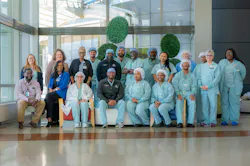
At a time when staffing shortages continue to challenge sterile processing departments nationwide, Nemours Children’s Hospital, Delaware, has quietly built something rare: a fully staffed, fully certified, high-performing SPD operating at scale without reliance on travelers.
Supporting 12 operating rooms, procedural suites, and 13 clinics across 18 specialties, the department processed instrumentation for more than 12,000 pediatric patients in 2025 while maintaining a 0% vacancy rate and 100% CRCST certification across its team.
But the real story isn’t just performance; it’s how Nemours got there.
Building a workforce pipeline that works
While many organizations continue to react to workforce shortages, Nemours took a different approach: build a sustainable talent pipeline from the ground up.
The department has embedded workforce development into its operational strategy, partnering with Delaware Technical Community College and local training programs to create structured pathways into the profession. Students receive hands-on clinical experience through externships and up to 400 hours of on-site training, allowing the organization to identify and develop talent early.
That strategy is now expanding further. In 2026, Nemours joined the Health Anchor Network (HAN) WorkAdvance initiative, a workforce development model that combines employer-based training, community recruitment, and guaranteed career pathways.
The result: a competitive applicant pool, strong retention, and a workforce that is not only stable, but continuously advancing.
Nemours has also redefined expectations for what it means to be an SPD professional.
Certification is not optional; it’s foundational. CRCST certification is required for employment, and the department is actively moving toward making CER certification a standard as well. Financial incentives, continuing education, and structured advancement pathways reinforce that expectation.
A four-level clinical ladder ties certification directly to career progression and compensation, while top performers achieving “Gold Crown” status (four certifications) are recognized in formal ceremonies alongside surgical staff.
“We actively support certification, conference attendance, and an SPD-specific clinical ladder, reinforcing that sterile processing is a profession, not just a job,” said Edna Gilliam, Assistant Vice President of Perioperative services & SPD for Nemours.
This level of professionalization does more than improve technical competency. It elevates the role of SPD within the broader perioperative ecosystem.

Technology as a Strategic Differentiator
Nemours’ investment in technology goes beyond routine upgrades and reflects a deliberate strategy to improve resilience, efficiency, and quality.
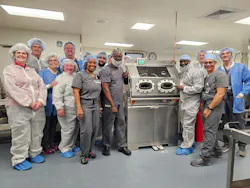
The department was the first in the U.S. to implement a self-contained steam-generation autoclave, eliminating reliance on centralized utilities while reducing energy consumption and environmental impact.
It also led early adoption of advanced cleaning technologies, including an AquaBrush system capable of reaching microscopic crevices in complex instruments, addressing one of the most persistent challenges in sterile processing.
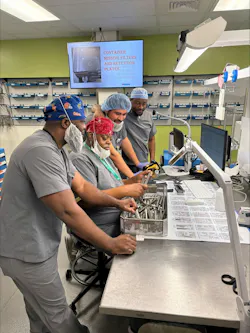
Even frontline workflows reflect innovation. Technician-driven improvements, such as customized lighted inspection tables to detect defects in sterile wrap, demonstrate how operational excellence is being shaped from within.
In one of its most significant practice changes, Nemours eliminated flash sterilization entirely more than five years ago.
By removing autoclaves from operating room sterile cores and standardizing reprocessing within SPD, the organization aligned fully with best practices while reducing variability and risk.
The transition required deep collaboration between surgeons, OR staff, and SPD, but the payoff was substantial: improved standardization, enhanced compliance, and more predictable instrument availability.


From Silos to “One Team”: Redefining SPD–OR Collaboration
One of Nemours’ most meaningful transformations has been cultural, turning a once-strained relationship between SPD and the operating room into a tightly aligned, high-functioning partnership.
When SPD leadership came under unified oversight, the organization made a deliberate shift toward a “one team” mindset, breaking down silos that had historically created tension between departments.
Structural alignment played a key role. Nemours introduced mirrored leadership roles, pairing lead SPD technicians with OR leads by specialty. This created clear, consistent points of contact for instrument needs, troubleshooting, and communication, while eliminating ambiguity and accelerating response times.
Daily huddles and cross-department collaboration reinforced that alignment. Leaders from both teams regularly spend time in each other’s environments, creating transparency and shared accountability around performance.
“Creating transparent, collaborative relationships between SPD, the OR, regulatory, and infection prevention teams is critical, reinforcing shared accountability,” Gilliam said.
To drive quality improvements, the organization established a multidisciplinary tray quality committee that meets daily to review issues in real time, identify trends, and implement corrective actions. This approach has enabled faster root cause analysis and continuous process refinement.
A data-driven focus on bioburden reduction further highlights this collaboration. By tracking “360 events,” which are instances where contamination completes the full reprocessing cycle undetected, the team has created a visible, measurable quality benchmark. The result is extended periods without events and a culture of rapid learning when issues occur.
Underpinning all of this is shared data. Transparent, trusted metrics serve as a single source of truth, helping eliminate blame, align teams, and focus conversations on performance and improvement rather than perception.
Turning Research into Practice
Nemours isn’t just implementing best practices; it’s helping define them.
A department-led study evaluating extended endoscope hang time from seven to 14 days demonstrated zero failures over a 150-day trial. The change has since been adopted as standard practice, increasing capacity while maintaining safety.
The findings have been presented at national conferences and published in peer-reviewed literature, extending the department’s influence beyond its own walls.
“Participation in research and knowledge sharing allows us to move beyond tradition and anecdote and toward evidence-based practice,” Gilliam noted.
This ability to translate operational challenges into research, and research into scalable solutions, is a hallmark of leading organizations.
SPD as a Strategic Partner, Not a Support Function
Perhaps the most important shift at Nemours is how sterile processing is positioned within the organization. SPD leaders are actively involved in facility design, workflow planning, and systemwide policy development, including enterprise standards for humidity control and sterile storage.
They are contributing to new surgical center builds, influencing equipment selection, and shaping operational strategy across multiple sites. In short, SPD is no longer operating behind the scenes, but it is embedded in decision-making at every level.
“SPD should be viewed as a core clinical service,” Gilliam added. “One that plays a critical role in infection prevention, regulatory readiness, fiscal stewardship, and patient outcomes.”
Nemours offers a clear counterpoint to many of the challenges facing sterile processing today.
While others struggle with staffing gaps, inconsistent training, and reactive operations, Nemours demonstrates what’s possible with a proactive, systemwide approach:
- Workforce pipelines instead of short-term hiring fixes.
- Certification-driven professionalism instead of baseline competency.
- Technology investments tied to resilience, not just replacement.
- Research and data guiding operational decisions.
- SPD integrated as a strategic partner across perioperative services.
The result is not just a high-performing department; it’s a model for what the future of sterile processing can look like.
Nemours by the Numbers
Workforce Excellence
- 0% vacancy rate
- 0 travelers or agency staff
- 100% CRCST-certified team
- Advancing toward 75% CER certification
Clinical Reach & Scale
- Supports 12 operating rooms
- Covers two procedure rooms and one endoscopy suite
- Serves 13 clinics across 18 specialties
- Over 12,000 pediatric patients are supported annually
Workforce Pipeline & Training
- 400 hours of on-site training for externs
- Partnerships with Delaware Tech and community programs
- Participant in Health Anchor Network (HAN) workforce initiative
Technology & Innovation
- First U.S. installation: self-contained steam-generation autoclave
- First U.S. installation: Torvan Safe Cleanbox (2025)
- Advanced fleet of Steris sterilizers, washers, and endoscope reprocessors
- Customized ergonomic workstations designed with technician input
Quality & Performance
- Zero failures in 150-day endoscope reprocessing study
- Transition from seven-day to 14-day endoscope hang time
- Elimination of flash sterilization for five-plus years
Why Nemours Won
Workforce Solved, Not Managed
Nemours didn’t just stabilize staffing, but it eliminated vacancies entirely through a deliberate pipeline strategy, creating a sustainable model others can replicate.
Professionalization at Scale
With 100% certification and a structured clinical ladder, the department elevated SPD from a technical role to a true clinical profession tied to advancement and recognition.
Innovation with Purpose
From first-in-U.S. technology installations to technician-driven workflow design, every investment was tied to resilience, quality, and efficiency, not just modernization.
Eliminating Outdated Practices
The department removed flash sterilization entirely and replaced it with standardized, evidence-based workflows, reducing risk and improving consistency.
True Perioperative Integration
SPD is embedded in facility design, policy development, and system strategy, positioning it as a core driver of surgical performance, not a downstream function.
Honorable Mentions: Leaders in Performance, Innovation, and Transformation
Children’s Hospital Colorado (Aurora, CO)
From crisis to high reliability: Model for SPD transformation
Children’s Hospital Colorado’s Sterile Processing Department stands out for one of the most significant transformation stories in this year’s field. Just a few years ago, the department faced a serious operational and regulatory crisis, culminating in an Immediate Jeopardy citation. Rather than pursuing short-term fixes, leadership used the moment as a catalyst for a comprehensive rebuild that was grounded in quality, accountability, and long-term sustainability.
Since 2025, the department has implemented a formal quality management program anchored by standardized work, visible performance metrics, and routine internal audits. This shift from reactive problem-solving to proactive quality assurance has improved accuracy, strengthened compliance, and rebuilt trust with perioperative partners. Workforce stabilization has been equally critical. Open positions have been dramatically reduced, reliance on agency labor has declined, and a structured onboarding and education program has created consistency across teams and campuses.
Technology has also played a key role in the department’s evolution. Integration between the electronic health record and sterile processing systems has enabled proactive case planning, improved instrument readiness, and enhanced traceability. At the same time, centralized inventory management and significant capital investment in instrumentation and infrastructure have reduced delays, minimized stockouts, and improved overall efficiency.
What distinguishes Children’s Hospital Colorado is not just recovery, but reinvention. The department has moved beyond compliance to become a high-reliability operation with a strong culture of engagement, accountability, and continuous improvement. Its journey offers a powerful blueprint for other health systems facing similar challenges.
ChristianaCare (Newark, DE)
From backlog to reliability: Rebuilding SPD for consistent surgical support
ChristianaCare’s Sterile Processing Department has undergone a significant operational turnaround, transforming from a system challenged by backlog and variability into a more stable, high-reliability partner in surgical care. Supporting more than 21,000 surgical cases across multiple campuses, the department processes over 1,000 trays daily in a complex, high-acuity environment.
One of the most notable achievements has been the reduction of a substantial instrument backlog. Previously ranging between 500 and 900 trays, the backlog has been reduced to a manageable level, significantly improving start-of-day readiness and supporting on-time surgical case starts. This progress has been driven by a combination of workflow redesign, improved staffing alignment, and enhanced operational oversight.
Workforce stabilization has been another critical component of the department’s success. ChristianaCare eliminated reliance on contract labor and established an internal Sterile Processing Trainee Program to build a sustainable talent pipeline. Weekly training sessions, standardized competencies, and clear productivity expectations have strengthened both performance and accountability across the team.
The department has also advanced its approach to quality through detailed defect tracking and data transparency. By categorizing defects and analyzing trends by service line, the team can target improvements more effectively and engage perioperative partners in shared problem-solving. Cross-training initiatives and joint education efforts have further strengthened collaboration between sterile processing and the operating room.
Looking ahead, ChristianaCare is focused on expanding its use of technology, including enhanced system integration and evaluation of advanced inspection tools, to further reduce variation and improve reliability.
ChristianaCare’s journey demonstrates how disciplined execution, workforce investment, and data-driven decision-making can restore confidence in sterile processing and support consistent, high-quality surgical care.
Grady Health System (Atlanta, GA)
Delivering precision under pressure in a Level I trauma environment
Grady Health System’s Sterile Processing Department operates at the heart of one of the nation’s busiest Level I trauma centers, where speed, accuracy, and reliability are critical to patient outcomes. In this high-pressure environment, the department has built a culture defined by teamwork, accountability, and service excellence.
The team’s performance is reflected in strong, consistent metrics. Case cart accuracy rates approach 100%, on-time tray delivery exceeds 95%, and response times to the operating room average less than five minutes. These outcomes are supported by a highly trained workforce, with 95% of staff certified and 100% cross-trained across all functional areas. This flexibility allows the department to adapt quickly to fluctuating surgical demand, including urgent and emergent trauma cases.
A key driver of success has been the department’s emphasis on communication and collaboration. Daily huddles, OR liaison roles, and regular interdisciplinary meetings ensure alignment between sterile processing and perioperative teams. This structure enables rapid issue escalation, real-time problem-solving, and a shared commitment to patient safety.
Grady has also invested in continuous improvement through the adoption of advanced inspection technologies, standardized workflows, and a long-term capital planning strategy. These efforts have resulted in reduced rework rates, improved throughput, and sustained regulatory readiness, including strong performance during accreditation surveys.
In an environment where there is little margin for error, Grady Health System’s Sterile Processing Department exemplifies how disciplined processes and a cohesive team can deliver reliable performance under constant pressure.
NYU Langone Health (New York, NY)
Scaling sterile processing for one of the nation’s most complex surgical environments
At NYU Langone Health, sterile processing operates at a scale and level of complexity few organizations can match. Supporting 71 operating rooms and procedural areas across its Manhattan campus, the department processes approximately 23,000 instrument sets each month while accommodating rapid growth in high-acuity specialties such as transplant, robotics, and neurosurgery.
To manage this complexity, NYU Langone has built a highly structured, data-driven operation grounded in Lean and Six Sigma principles. Over the past several years, the department has achieved measurable improvements across key performance areas. Defect rates have fallen below 1%, missing instrument spend has been reduced by more than 60%, and case cart preparation times have been cut in half. These gains have been realized while continuing to support increasing procedural volume, demonstrating the department’s ability to scale without compromising quality.
Central to this success is a strong focus on analytics and accountability. Enterprise dashboards track performance across quality, productivity, and service metrics, enabling leaders to identify trends, address variation, and drive continuous improvement. Dedicated roles, including OR liaisons and instrument coordinators, further strengthen alignment with perioperative teams and ensure consistent case readiness.
Beyond operational performance, NYU Langone has invested in workforce development through structured education programs, leadership training, and formal preceptor initiatives. These efforts support both frontline staff and emerging leaders, helping sustain performance in a demanding, high-volume environment.
NYU Langone’s sterile processing operation demonstrates how large academic medical centers can combine scale, precision, and innovation to deliver consistent, high-quality surgical support.
About the Author
 Daniel Beaird
Daniel Beaird
Head of Content and Editor-in-Chief
Daniel Beaird is Head of Content and Editor-in-Chief for Healthcare Purchasing News.