Beyond the Checklist: Building the Future SPD Workforce
Key Highlights
- Traditional SPD training often emphasizes checklists, which may not ensure true competency or understanding of underlying principles.
- Effective education now incorporates critical thinking, scenario-based learning, and understanding the 'why' behind each step to improve safety and decision-making.
- Standardization and consistency in workflows, onboarding, and ongoing assessments are crucial for reducing errors and maintaining high-quality reprocessing.
- Embedding education into daily operations and involving staff in process improvement fosters ownership, engagement, and continuous learning.
- Developing communication, conflict management, and leadership skills is essential for technicians to serve as patient safety advocates and clinical partners.

Sterile processing professionals face increasing complexity as surgical instrumentation grows more sophisticated, regulatory expectations continue to evolve, and healthcare organizations place greater emphasis on patient safety and quality outcomes. At the same time, staffing shortages, workforce turnover, and the need for faster onboarding have created new challenges for sterile processing department (SPD) leaders responsible for developing competent, confident technicians.
For many years, SPD education centered on orientation checklists, annual competencies, and learning specific tasks. Today, however, industry experts are calling for a different approach – one that emphasizes critical thinking, interdisciplinary collaboration, communication skills, and a deeper understanding of how sterile processing impacts patient care.
As healthcare organizations work to strengthen their SPD workforce, educators are increasingly focused on building programs that move beyond task completion to competency validation, continuous learning, and professional development.
HPN spoke with three sterile processing education leaders about how training programs are evolving, what skills future SPD professionals will need, and how organizations can better prepare technicians to serve as patient safety advocates and clinical partners.
Why checklists are not enough
All three experts warned that SPD education often focuses too heavily on completing onboarding requirements rather than validating competency.

Carol Malone, AAB, CSPDT, CRCST, CIS, CHL, CER, sterile processing educator at The Cleveland Clinic, noted how many organizations treat orientation as a checklist exercise, verifying that a task was demonstrated without ensuring the technician can consistently perform it independently or understand the underlying rationale - the “why” behind the task or function. According to Malone, new hires are sometimes moved into staffing roles before they are truly ready because departments need immediate staffing coverage.
“We have checklists of certain things we know we need to show them, but do we really stop to see if they’ve comprehended the information, can repeat it back to us, and can demonstrate to us multiple times consistently? Too often, that validation step is missing, and we end up releasing new hires too early - or pulling them into staffing when they are still not ready simply because we need coverage. Having someone in the position isn't the same as having a competent, confident technician who can work independently. Orientation should be about building competency, not just completing a checklist.”
“SPD education cannot remain just a checklist exercise,” said Jhmeid Billingslea, CRCST, CIS, CER, CHL, CMRP, CST, HACP-IC, executive director, Surgical Services Strategy & Performance, Advantage Support Services. “It must become part of the organization’s quality and patient safety infrastructure. That means validated competencies, specialty-specific training, real-time performance data, and formal collaboration between SPD, the operating room (OR), infection prevention, quality, risk, supply chain, and executive leadership.”
From task completion to critical thinking
A common theme among all three experts was the importance of teaching technicians not only how to perform a task, but why each step matters.
Anna R. Castillo, BS, CRCST, CSPDT, CHL, CIS, CFER, sterile processing educator, Texas Children’s Hospital, said effective education moves beyond task-based training and helps technicians understand the science that directly ties their work to patient safety. In her role, she has focused on building education that incorporates psychological theories or human factors.
“One of them is scenario-based training, like our competency ‘triathlon,’ where small groups of staff must think through real-world situations together, rather than just repeat a process,” Castillo explained. “This approach builds critical thinking, team building, and helps staff adapt when conditions aren’t perfect, which is often the reality in SPD. Long-term success depends on creating technicians who can make informed decisions, not just follow instructions.”
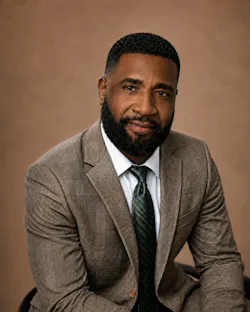
Billingslea noted that understanding the “why” behind reprocessing requirements helps technicians recognize risk before it reaches the patient. He stated:
“Modern SPD education must be more than just rote memorization. Understanding the ‘why’ fosters the most important tool SPD professionals have in their arsenal: critical thinking. National standards such as AAMI ST79, ST90, ST91, AORN guidance, and CDC reprocessing guidance all point back to the same principle: safe reprocessing requires defined processes, competent staff, documentation, monitoring, and continuous improvement. When technicians understand the ‘why,’ they are more likely to recognize risk and stop unsafe work before it reaches the patient.”
Malone recalled a recent conversation in which a technician questioned the use of reverse osmosis or deionized water during final rinsings of hand-washed items. Once the rationale was explained that critical water undergoes additional processing to remove impurities that may still be present after municipal water treatment, the employee immediately understood the purpose. The experience reinforced the importance of explaining the science behind each step.
“When they understand why we’re doing it, they’re much less likely to skip steps,” she said.
Building consistency through standardization
“My two favorite words are organization and consistency, and consistency comes from standardized practice,” said Malone.
She believes departments need clear onboarding structures, standardized workflows, and defined expectations. When sterile processing professionals deviate from established processes, variation can quickly lead to errors, making consistency in both training and operations critical.
Castillo believes organizations must move beyond treating education as a one-time onboarding event and instead embed learning into daily operations. She stated:
“Consistency comes from standardization, visibility, and shared ownership. Education needs to be embedded into daily workflows, not limited to onboarding or annual competencies. Allowing sterile processing staff to join process improvement committees and work on initiatives engages staff to understand and believe in the process. Frontline staff participate in defining best practices. That engagement improves consistency because staff understand and believe in the process.”
Castillo added that standardization across facilities reduces variation and directly supports patient safety with the caveat that many organizations must overcome challenges to achieve it.
“The bigger barriers are differences in resources and tools, culture, and leadership priorities,” she explained. “Without alignment of all of these at the leadership level, education becomes fragmented. To make this effective, standardization must be flexible but accountable; there must be clear core expectations or goals, with room for site-specific workflow differences.”
Standardization does not end after onboarding. Malone described using weekly reviews, questionnaires, audits, and routine check-ins to monitor progress and identify knowledge gaps. She recommends that during onboarding, educators ask technicians what they succeeded at, where they struggled, and what barriers affected their performance. Those conversations often reveal areas where additional training is needed, particularly for equipment or processes that technicians infrequently encounter.
Malone also emphasized the importance of preparing preceptors. At her organization, preceptors attend an 8-hour class where they are shown what new hires are learning in their cohorts. The approach helps reduce conflicting messages between educators and frontline trainers while reinforcing consistency across departments.
“We want to avoid a new hire going back to their site where a preceptor questions what they learned during onboarding,” said Malone. “During these classes, it is not uncommon for preceptors to ask, ‘When did this change?’ It gives us the opportunity to reinforce the importance of staying current through CEUs, reading articles, and attending conferences.”
Developing the whole professional
Beyond technical proficiency, Billingslea, Castillo and Malone believe the next generation of SPD professionals will need stronger communication, critical thinking, and conflict management skills.
“AAMI says that all supervisory personnel should demonstrate their current knowledge and participate in continuing education programs and courses, not just the educator,” said Billingslea. “SPD leadership, not just the educator, must train and leverage technicians as frontline risk and infection preventionists. They need to know how to explain why a tray is not ready, why a shortcut is not acceptable, or why a process needs escalation without turning the conversation into conflict. Technical knowledge protects the process.”
“Accountability, confidence, grit, and community are essential when working in any environment,” said Castillo.

She described an SPD program in Houston that goes beyond preparing technicians for the certification exam to embed core skills. Aside from learning and preparing for the certification exam, this free program requires students to attend weekly social gatherings to build community. Students must also have impeccable attendance and are held accountable for deliverables and timelines.
“This organically builds confidence and grit after practicing discipline while they’re in the program,” noted Castillo. “We’ve seen amazing results in these students, and it's not triggered by age, ethnicity, or background.”
Malone believes education should help technicians see themselves as healthcare professionals whose expertise matters. Too often, she said, technicians view themselves as “just a tech” and hesitate to challenge requests that conflict with standards or policies - for example, when a member of the OR team wants to take trays from the SPD before they are fully cooled. Education, Malone argued, should give them both the knowledge and confidence to explain why certain practices are unsafe and speak up when patient safety is at stake.
“We really have to empower our technicians with the knowledge and education to be able to stand up and do the right thing,” she said.
Using data and technology to reinforce learning
Technology is becoming an increasingly important tool for reinforcing education and accountability. Castillo said tracking software and cleaning verification tools allow departments to “measure compliance instead of assuming it.”
“Technology plays a critical role in making work visible,” she continued. “Data helps identify trends, whether it’s repeated defects, missing steps, or delays in processing, which allows leaders to address gaps proactively instead of reactively. Ultimately, data shifts the culture from opinion-based to evidence-based practice.”
Billingslea believes future SPD professionals will have the ability to connect standards, manufacturer instructions for use (IFU), workflow reality, and customer service at the touch of a button. He stated:
“Priority work and the data that drives compliance, performance, and on time delivery of sterile goods will be constantly available on a live dashboard that is always visible from their workstations. Technical knowledge without communication can create conflict. Communication without technical knowledge can create unsafe compromise. The profession needs both.”
Breaking down silos through shared education
Historically, SPD education has focused on preparing technicians to perform their own departmental responsibilities. Our experts believe future education models must help SPD professionals understand how their work connects to the broader perioperative environment.
“It is essential that SPD evolves from a siloed department struggling for respect into a center of customer experience for the surgeons, OR teams, and clinics that they serve,” said Billingslea. “SPD and OR teams should be trained together because the instrument cycle belongs to both departments. The process does not start in decontamination, and it does not end in sterile storage. It includes point-of-use treatment, transport, cleaning, assembly, sterilization, storage, case cart preparation, opening of the sterile field, and post-case handling.”
Castillo emphasized that patient safety depends on how well SPD and OR understand each other, not just their own roles. She stated:
“An ideal model would include learning from the start, shared simulations, and real case debriefs. It’s less about adding education and more about connecting the work so both teams see how every step affects the next. When SPD and OR train together, communication improves, errors decrease, and accountability becomes shared.”
Both experts stressed that cross-functional education should begin early. Castillo advocates for introducing these concepts during certification programs and reinforced at onboarding once hired.
“If we wait until staff are already in their roles, we’re now trying to undo silos that have already formed,” she noted. “Early exposure is key.”
Billingslea explained how onboarding provides an ideal opportunity to help teams understand each other’s responsibilities before silos form. He stated:
“The earlier teams understand each other’s responsibilities, the less likely they are to develop the ‘that’s not my department’ mindset. An ideal model would include joint education for SPD, OR, infection prevention, quality, and perioperative leadership. Topics should include point-of-use care, loaner trays, IUSS governance, sterile field opening practices, defect reporting, implant release, and tray accuracy.”
However, engaging surgeons and perioperative leaders requires a different approach. Rather than focusing on technical details, Billingslea recommends connecting SPD processes to outcomes that matter to surgical teams, such as first case on time starts (FCOTS), delays, tray accuracy, case readiness, patient safety, and cost.
“To engage surgeons and OR leaders, SPD education has to speak their language; surgeons do not need a lecture on every sterilizer cycle, but they do need to understand how late loaner trays, oversized sets, poor point-of-use treatment, and inaccurate preference cards affect the entire surgical day,” Billingslea explained.
“The best way to engage leadership is with real data,” he added. “Show the top trays causing delays, the instruments that are never used, the IUSS rate by service line, the repair trends, and the defects linked to preventable behaviors. Once the data is visible, the conversation shifts from blame to shared accountability.”
To better engage surgeons and perioperative leaders in understanding SPD processes and constraints, Castillo recommends short, focused sessions that show how SPD impacts case delays, instrument readiness, and patient safety.
“These are far more effective than broad overviews,” she explained. “The key is making it practical and data driven. Provide real scenarios, real impacts, and clear connections to surgical efficiency and outcomes. When they see how SPD constraints affect their day, engagement becomes natural, not forced.”
The future of SPD education
Billingslea, Castillo, and Malone described a future in which SPD education becomes more structured, collaborative, and competency based.
Malone pointed to programs she has helped develop that combine classroom instruction, hands-on learning, competency validation, ongoing assessments, and dedicated preceptor training. Rather than relying on lengthy classroom sessions, the model incorporates short educational modules, structured learning cohorts, routine check-ins, and repeated skills validation throughout the onboarding process.
“It wasn't meant to be an all-day, sit-at-a-computer experience; it was meant to enhance learning,” she commented.
Castillo envisions a future in which SPD education is fully integrated with OR practice rather than operating as a separate discipline. It would include simulation, real-time feedback, and ongoing validation.
“Most importantly, it would position SPD as a clinical partner, not a task-based role,” said Castillo. “To make that a reality, we need investment in education, strong leadership alignment, and a cultural shift that values SPD’s impact on patient outcomes just as much as what happens in the OR.”
Billingslea believes the future of SPD education will be based on standardized education, specialty credentialing, workflow guardrails, interdisciplinary training, and leadership accountability.
“My bottom line is simple: the future of SPD education is not more PowerPoints,” said Billingslea. “It is smarter education, stronger systems, visible data, and empowered technicians who understand their role in protecting the patient.”
About the Author
 Kara Nadeau
Kara Nadeau
Senior Contributing Editor
Kara Nadeau is Sterile Processing Editor for Healthcare Purchasing News.