Point-of-Use Treatment (POUT): Why Is It Important?
Key Highlights
- Educate OR staff on the critical importance of POUT to prevent biofilm formation and ensure instrument sterility.
- Assess and improve the availability and accessibility of POUT tools such as sprays, gels, and humidity packages.
- Implement data tracking and accountability measures, like staff initials on carts, to reinforce compliance and identify areas for improvement.
- Address time pressures in the OR by streamlining POUT procedures and integrating them into routine workflows.
- Use targeted quality improvement projects to monitor compliance rates and foster a culture of safety and accountability.

Q: “In my facility, we’re having trouble with compliance with point-of-use treatment (less than 50% of carts). What can help us increase those numbers?”
A:
Are threats of violence completely off the table?
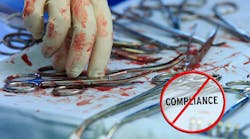
Joking aside, point-of-use treatment (POUT) is one of the most common gaps observed in the device reprocessing cycle. The problem really starts, fittingly, at the point of use. According to a Becker's Hospital Review article co-authored by Basham and Besedick (2020)1, the operating room (OR) is the facility’s largest revenue driver—". . . typically [generating] up to 70% of total health system revenue," and ". . . [making] surgical services the largest revenue generator for a hospital, supporting access to numerous other healthcare services." Because of this, there is a major focus from C-Suite and the financial side of the business to turn over rooms as quickly as possible so that more procedures can be performed. Furthermore, a popular way to influence room turnover for on-time or early case starts is to hold the OR employees accountable. If a procedure is running behind, “extra” steps (e.g., POUT) are sometimes the first casualties in the steps skipped for the sake of speed.
Now, if you ask OR personnel if POUT is an essential step in the processing cycle, they will probably say "Yes.” But this problem really goes back to when I started in the industry over 20 years ago.
When I was a wee-lad technician just starting out, POUT was called 'pretreatment,' and, more often than not, it just wasn’t done at all!
There were very good OR colleagues who read the research and they were trying to do best practice, but to be very honest, it was only about 10−20% of the carts that had this step performed. When I would call or talk to OR staff, their first response was something like, “Isn’t sterile processing supposed to clean the instruments?” This mindset has certainly shifted and improved. However, there is still a small subset of surgical techs and nurses holding to this archaic way of thinking even in today’s modern healthcare environment.
So why is POUT such a critical step in the processing cycle? And why does it need to be performed at the point of use?
Let’s start with why POUT is such a critical step. If you’re not familiar with biofilm, it’s a structured community of microorganisms that form a complex protective matrix or “shell” around themselves, which makes them particularly difficult to remove. Biofilm is resistant to cleaning chemistries and disinfectants. If the biofilm is allowed to form on a device, they will strongly bond to it and can begin forming the protective layer within 20 minutes. With the realities of modern sterile processing being what they are, it’s very rare the person at the sink in the decontamination area will start cleaning devices less than 20 minutes after a case is finished. In most cases (especially later in the afternoon), these carts can sit in the Sterile Processing Department (SPD) for hours before the decontamination technician will open them and begin working.
This is why POUT is so critical! Wiping devices clean at the point-of-use means that the majority of “gross soil” (a nonsense term we in the industry invented, but most closely means “visual soil”) will be wiped away immediately. This means fewer microorganisms to form the biofilm and less biological debris to attach itself to our devices.
Operating Room techs are familiar with wiping instruments at the point-of-use, as they are always instructed to wipe them with low-linting cloth and sterile water before re-using in the OR. So, it’s just one more wipe before finishing the case that is sometimes skipped.
There are a number of methods of POUT that are also effective. You have the option of a humidity maintenance bag–a device that you can put instruments inside that maintains the humidity inside the package. These are effective means for point-of-use transport because the soil(s) on the instruments will have a much harder time drying and bonding to the substrate (the surface of the device) in a damp, humid environment.
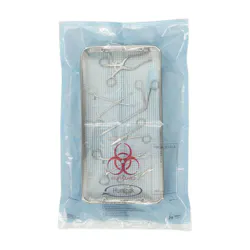
We used to utilize these humidity maintenance packages (e.g., Fig. 1) at a few of my previous hospitals, and the instruments were always super-easy to clean coming out in the Decon area. I would particularly recommend humidity maintenance packages for clinic areas that do not have routine pick-up and drop-off of instruments to the SPD, as they can be an effective means for keeping the instruments moist for a short time period. Just make sure they are in an OSHA-compliant transport container3 before transporting over to sterile processing.
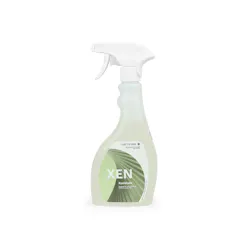
The other option is POUT sprays, gels, or foams, which are more commonly used on devices coming from the OR and can be a very effective means of preventing biofilm formation. These products—whether a spray (e.g., Fig. 2), gel, or foam—typically work by being applied immediately after wiping down at point-of-use, then placed inside an OSHA-compliant transport container.3
Now, for the more complex part of the question: How do we improve compliance?
Step 1: In my opinion, would be to start with education. Most OR techs aren’t skipping this step because they hate sterile processing. Usually, they are under tremendous pressure to go quickly following a case. I’ve even seen them get written up for going too slowly on room turnover. But POUT is too critical of a step to be skipped. I would advise having a department educator, or outside educator, perform education on POUT and the dangers of skipping it. Most professionals with a conscience will understand why it’s so important and make note of doing these steps in the future.
Step 2: Beyond education, do techs have the tools to do the job correctly? You may need to assess your POUT protocol.
- Do you have bottles of pretreatment spray or humidity packages in the right places?
- Are bottles of pretreatment spray or humidity packages difficult to access?
- Are the bottles of pretreatment spray or humidity packages not compliant with the foam, and is the spray perceived to be easier?
Whatever the reason, try and find out why compliance is a problem.
Step 3: Lastly, data is of paramount importance when assessing POUT. You can’t just go to the OR with accusations and exaggerations like, “You guys NEVER spray instruments before sending to SPD!” These types of exaggerations will often fall on deaf ears. I would suggest tracking how many carts arrive in the decontamination area and how many carts do not have POUT steps performed.
Once you have this data, you need to start a quality improvement project using it as a baseline. One very effective method of accountability with POUT is to have the OR staff write their initials on the cart before sending it to sterile processing. This simple accountability step causes the OR staff to think about the POUT step more closely, as they know they will personally take responsibility for the contents of the cart.
I hope that helps answer your question. Good luck on improving your POUT program!
References
-
Basham, L., & Besedick, M. (2020, July 28). Nervous About Your Hospital’s Financial Viability? Turn to Surgical Services. Becker’s Hospital Review. Retrieved September 29, 2026, from https://www.beckershospitalreview.com/finance/nervous-about-your-hospital-s-financial-viability-turn-to-surgical-services/
-
Healthmark Industries. [image]. Humipak - Healthmark, A Getinge company. Healthmark, a Getinge Company. https://www.hmark.com/product/humipak/
-
OSHA/Dept of Labor Occupational Safety and Health Administration. Code of Federal Regulations: Occupational Exposure to Bloodborne Pathogens. Title 29 [Bloodborne pathogens], Standard No. 1910.1030 [(d)(2)(xiii)(A)]. United States Dept of Labor/OSHA. https://www.osha.gov/laws-regs/regulations/standardnumber/1910/1910.1030
-
Healthmark Industries. [image]. XEN Xcelerate - Healthmark, A Getinge company. Healthmark, a Getinge Company. https://www.hmark.com/product/xen-xcelerate/
About the Author
 Adam Okada
Clinical Education Specialist, Healthmark, a Getinge company
Adam Okada has 18+ years of experience in Sterile Processing and is passionate about helping improve the quality of patient care by giving SPD professionals and their partners greater access to education and information. He has worked in just about every position in the Sterile Processing Department, including Case Cart Builder, SPD Tech I, II, and III, Lead Tech, Tracking System Analyst, Supervisor of both SPD and HLD, Manager, and now as an Educator. Adam is the owner of Sterile Education, the world’s first mobile application dedicated to sterile processing education, and a former Clinical Manager at Beyond Clean. He has published articles for HSPA’s Process magazine, is a co-chair on AAMI WG45 as well as co-project manager for the KiiP “Last 100 Yards” group, and is the former President for the Central California Chapter of HSPA. Adam is currently a Clinical Education Specialist at Healthmark, A Getinge company, where he works on Healthmark webinars, hybrid events, and educational videos, as well as the "Ask the Educator" Podcast with Kevin Anderson.
Related
 pouprimary
 Endo1