Study Says Quality of Nonsurgical Care Declined During 2020 COVID-19 Surges
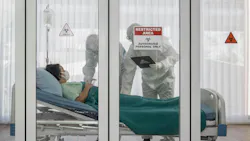
A new analysis that studied over 19 million hospital discharges in the U.S. suggests that “the quality of nonsurgical care for non-COVID patients declined significantly during 2020 COVID-19 case surges.” CIDRAP has the news.
Researchers from the Agency for Healthcare Research and Quality (AHRQ) “evaluated care-quality indicators of 19,111,629 releases from 3,283 hospitals in 2019 and 2020.” They specifically sought out hospital admissions for patients with no COVID-19 or pneumonia diagnosis and a higher risk for “pressure ulcers and death due to heart attack, heart failure, stroke, gastrointestinal bleeding, hip fracture, and coronary-artery stent placement.” They also split each hospital-week into those with high COVID-19 admission – 15 or more per 100 beds – and low admission – less than 1 per 100 beds.
Looking at weeks 18 to 48 of 2020, 35,851 hospital-weeks (36.7%) “had low COVID-19 patient admission rates, and 8,094 (8.3%) had high rates.” During those high COVID-19 weeks, rates rose for pressure ulcers, heart failure death, and hip fracture death, with a relative change of 20-30% each. The weighted average of mortality for the care indicators also climbed 10.6% during those weeks.
The researchers theorized that the decline in care quality “may have occurred because of staff shortages, assignment of inadequately trained staff to medical floors for non-COVID patients, visitor policies limiting family support, inability to monitor and manage changes in patient status, a lack of personal protective equipment, and disrupted quality-improvement processes.”
About the Author
 Matt MacKenzie
Associate Editor
Matt MacKenzie is Senior Staff Writer and Associate Editor of Healthcare Purchasing News (HPN), where he leads daily news coverage and contributes in-depth features on healthcare supply chain, sterile processing, infection prevention and clinical operations. Through industry reporting and expert interviews, he examines the trends, technologies and operational challenges shaping healthcare purchasing and patient care.
Related

 Business G97a50d5ee 1280