Study Makes New Discoveries of Macrophages and Immune Response
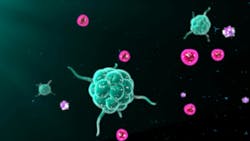
Researchers found that “immune cells known as macrophages remain poised to fight repeat infections due to the persistent presence of signaling molecules left behind during previous infections.”
Macrophages “patrol the body’s tissues for potential threats such as invading microbes or cancerous cells. Macrophages can engulf and kill these threats, as well as send signals to other immune cells to join the fight, thereby promoting either inflammation or tissue repair.” Memory formation in macrophages depends upon interferon gamma, which is a signaling molecule that leaves “hundreds of immune response genes poised for action.” How macrophages maintain this memory, however, is unknown.
In trying to find answers, this study reports that “human macrophages temporarily exposed to interferon gamma form 1000s of new enhancers that persist for many days and strengthen the cells’ subsequent response to bacterial molecules. The researchers discovered, however, that small amounts of interferon gamma remain stuck to the macrophages and their immediate surroundings even after most of the cytokine has been removed.” Signals from this residual interferon gamma are “required to maintain the macrophages’ memory.”
Erasing the macrophages’ memory could “be therapeutically useful in autoimmune disease where macrophages have become aberrantly trained to attack the body’s own, healthy tissues, such as in lupus, rheumatoid arthritis, or type 1 diabetes.”
About the Author
 Matt MacKenzie