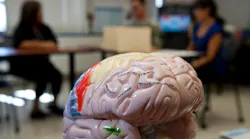
A new study found that blood tests measuring two proteins released after a brain injury could help identify patients with traumatic brain injury who otherwise might be sent home undiagnosed.
Around 2.8 million people in the U.S. experience a traumatic brain injury (TBI) every year. According to a database at the Pitt School of Medicine, more than 50% of participants with mild brain injury have functional limitations one year after injury. One factor in this might be that patients aren't properly identified in the beginning.
Patients with assumed TBI are usually first given a CT scan. CT scans miss brain lesions in about 25% of patients that a brain MRI would detect; CT scans are inexpensive, widely available, and quick, hence their widespread use.
Additionally, many patients with normal CT scan results still have symptoms. MRI, on the other hand, provides a more detailed look at brain tissue and can catch damage a CT misses. MRIs are slow, costly, and not practical for emergency triage, however.
A blood test that measures two proteins could help doctors decide whether a patient needs a CT scan. Within 24 hours of injury, levels of a protein called GFAP in the blood could separate patients with an acute brain injury from those with no sign of damage.