Preparing Hospitals for the Next High Consequence Pathogen
Key Highlights
- Hospitals should review and update travel screening questions, especially considering indirect travel routes from the DRC to prevent unnoticed cases.
- Effective patient movement pathways and isolation protocols are crucial to prevent cross-contamination within healthcare facilities.
- Maintaining adequate stockpiles of PPE, disinfectants, and supplies, along with verifying supplier lead times, is vital for rapid response.
- Environmental services must ensure disinfection protocols align with CDC and EPA guidelines, focusing on low infectious dose risks associated with Ebola.
- Regular drills and after-action reviews help identify gaps in preparedness, ensuring staff are trained and protocols are effective for high-consequence pathogen response.

A rapidly expanding Ebola outbreak in the Democratic Republic of the Congo (DRC) presents little immediate danger to the U.S., but it offers a timely test of hospital preparedness. A suspected case would activate far more than an infection prevention response. Emergency care, laboratory services, environmental services, supply chain, occupational health, communications, and public health partners would all need to execute established plans without delay.
HPN spoke with two experts from NETEC, the National Emerging Special Pathogens Training & Education Center, Dr. John Lowe, PhD, NETEC Co-Principal Investigator, and Director of the Global Center for Health Security and Assistant Vice Chancellor for Health Security Training at the University of Nebraska Medical Center, and Dr. Vikramjit Mukherjee, MD, NETEC Co-Principal Investigator, and Chief of Critical Care and Special Pathogens Program at NYC Health + Hospitals/Bellevue.
Several warning signs suggest the response faces significant challenges. Lowe said, “the number of cases is mounting much more quickly than it was in the 2014 outbreak. Even after 100 days into the outbreak, we’re seeing a majority of cases identified in the community, not identified through documented or tracked contact with a prior case.” The continued detection of cases outside known contact chains suggest transmission is not yet fully contained.

The outbreak remains concentrated in a handful of districts in the DRC. Cases were also reported in Uganda, where a rapid response prevented wider spread. Even so, workforce capacity and healthcare worker safety remain concerns. Far fewer healthcare workers are involved with this response than in 2014, Lowe said. “We’re seeing a higher proportion of healthcare workers infected in this outbreak than in 2014, although the numbers overall are lower.”
Mukherjee cautioned that the reported totals may not capture the outbreak’s full scale. “Two-thirds or so of the cases haven’t been diagnosed yet,” he said. “The numbers are already pretty bad, but the situation on the ground is probably multifold worse.”
Neighboring countries, including South Sudan, Rwanda, and Uganda, face the most immediate risk. For U.S. hospitals, preparedness should be proportional rather than alarmist. Leaders do not need to build a specialized treatment center, but every facility should be able to recognize a potential case, protect staff and patients, and initiate a safe transfer or escalation.
Preparedness starts at the front door
Lowe cautioned that this outbreak is likely “going to continue to grow and will likely go on for a long period of time. We’re not seeing the end in sight. Sustained vigilance in assessing travelers for potential risk is going to be key.” One potential complication is that the DRC has porous borders, meaning people traveling from the country may fly out of Rwanda or Uganda instead. This means it is even more important to “ask travel screening questions at the point of care as we’re evaluating incoming patients,” bearing in mind that travel routes may be complex.

Mukherjee stressed a protocol he called “III:” identify, isolate, and inform. He said emergency departments should be able to identify a person who arrives with a rash or a fever and relevant travel history; isolate that patient, ideally in a negative pressure room; and then inform infectious disease and public health professionals to ensure the patient receives the help they need. This is part of a Joint Commission “minimum accreditation standard” that “incentivizes hospitals to do this more than they were doing before. There are tools that can help them prepare, including templates and mystery patient drills and experiments that can test their preparedness efforts.”
Both Lowe and Mukherjee stressed that EDs must be able to recognize when a patient may require specialized care. Rather than expecting every ED to be able to provide advanced critical care capabilities for the patient, a person who has relevant travel history and symptoms should immediately be put through these protocols.
Lessons learned and gaps to close
The 2014 Ebola outbreak saw an advancement in travel screening protocols across the country. Lowe touts hospitals’ newfound abilities to “leverage electronic health records to enhance our travel screening. We saw widespread adoption of patient intake processes using EHRs. It became much more achievable to screen all patients for travel and to be able to raise a flag.” He also stressed the importance of precision when it comes to travel screenings; it may sound obvious, but “understanding the difference between the ‘Democratic Republic of the Congo’ and ‘the Congo,’ or of any African nation and the DRC, is crucial.” Even just making sure workers are caught up with the geographical factors at play can make an important difference.
He also said that that, during that outbreak, we saw that “advanced supportive care is really effective. In the U.S. and Europe, we saw case-fatality rates well below the 40-50% range in cases in Africa. We know that delivering care without delay can have a meaningful change in outcomes.”
A gap that could be focused on is making improvements to the level of unintended exposures that happen, especially among healthcare workers. Mukherjee emphasizes the need to limit the amount of time suspected patients are spending in emergency rooms, where they might infect the people next to them or the healthcare workers who initially handle their cases.
Lowe spoke on the importance of reinforcing the physical infrastructure of isolation processes, or “what room we are putting people in and why we’re putting them in there. Also, keeping an eye on how our staff are entering and exiting that room so that we maintain safety for the rest of the hospital is key. Having a really defined protocol for the required personal protective equipment (PPE) to enter the room is helpful in ensuring that people use it effectively.”
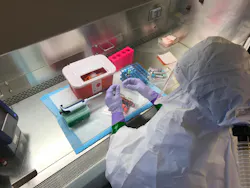
Both doctors emphasized the need for maintaining an appropriate level of basic care for all patients regardless of their eventual diagnoses. “We want to make sure that the patient in question gets the same level of care whether they have Ebola or a more common illness such as sepsis,” Mukherjee said. Reinforcing certain drills and protocols every so often can help “identify some gaps that we try to cover and learn from with an after-action report in terms of the level of care we can provide within a high-level isolation unit.” “Looking at the laboratory and healthcare provider workflows and being able to identify the things we can do safely to ensure a base level of care, irrespective of if the patient has Ebola or a different diagnosis, are really crucial, basic steps,” said Lowe.
Supply chain readiness before demand spikes
For supply chain leaders, the central lesson is to make key sourcing and inventory decisions before a suspected patient arrives. Facilities should identify the PPE ensemble, patient-care devices, disinfectants, specimen-collection supplies, and waste handling materials their protocols require, then confirm that those products are available and clinically appropriate.
"Looking at normal supply chain pipelines and understanding what equipment—PPE or patient care devices—is going to be used and predetermining those ahead of time is key for preparing," Lowe said. "We recommend stockpiling a 21-day supply or some defined period of time. That way, if a scenario arises that directly affects a facility, you already know that you have a baseline amount of PPE or key devices for that care on hand.
"If a facility has a PPE ensemble that they've said is for Ebola and it's not part of their daily PPE consumption and supply, these are the things that become a risk for running into supply chain and access shortages. It's always a great idea to reach out to suppliers and verify what supply looks like, what lead times are, for these core pieces of equipment when a viral hemorrhagic disease or a novel respiratory disease presents the potential for cases in the U.S. to increase."
That review should extend beyond on-hand quantities. Products reserved for rare events can expire, become obsolete, or no longer align with current clinical protocols. Supply chain, infection prevention, and occupational health teams should therefore review inventory together, verify fit testing and training requirements, and establish triggers for replenishment or emergency sourcing.
Environmental services and waste management
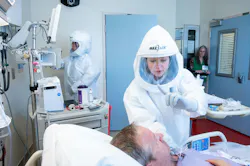
Viral hemorrhagic fevers like Ebola create distinct challenges to environmental services (EVS) teams, particularly around disinfection, worker protection, and waste management. Hospitals should know in advance whether waste can be treated onsite, which vendor would accept it, how it would be packaged and transported, and what the added cost and pickup timeline would be.
"Many of these high consequence infectious diseases – including Ebola – create Category A waste. Level 1 facilities [or Regional Emerging Special Pathogen Treatment Centers (RESPTCs)] have autoclaves where they sterilize their waste, but the ones that don't have their waste taken by a vendor to an autoclave facility where they can sanitize offsite," Mukherjee said. "Either of those two options work, but the second one is a bit more expensive. Waste handling in EDs can be a vulnerability."
Lowe stressed the importance of looking at the CDC and EPA's lists of "approved label disinfectants for Ebola. Ensure that you have solid supplies of the products that you already use and verify that they're on the approved list for this specific concern; then, make sure they fit into your protocol.
"We tend to see much more robust environmental cleaning and disinfection protocols for a viral hemorrhagic disease, in part because the infectious dose – the amount of the infectious disease that can cause infection – is incredibly low. A somewhat small exposure to bodily fluids from an infected person is much more likely to result in infection than what we see with other infectious diseases. Having checklists that ensure spaces are effectively cleaned and disinfected is important. Baseline healthcare cleaning and disinfection protocols need to be followed, as well as any secondary or tertiary steps or methods added for the specific threat.
"Risk assessment is the primary thing that needs to be done, and it's always best done prior to a suspected case presenting to a facility. We need to understand how we collect specimens for the lab at the bedside, how we get those specimens to the lab, how they are processed for different common pathways in the lab. And the margin for error is much lower because of that low infectious dose."
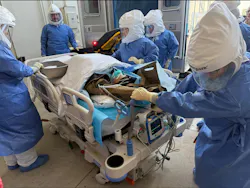
Moving a patient through a facility when they have a suspected or confirmed case of Ebola also becomes more complicated due to how infectious those patients are. Lowe shared an anecdote about when he worked on the Ebola outbreak in 2014. "I was part of a rapid assessment team that went around the country and looked at different facilities. There were some facilities that, in order to take a patient from point A to point B, would always go through or by the cafeteria. They identified that if they had someone under investigation for Ebola, they would take a different pathway. This was in part because they determined that even if they emptied the cafeteria out for that movement, they still weren't comfortable with the risk assessment of having potentially exposed the space."
Mukherjee added that, when moving patients from an ED, "we don't want this to be a media nightmare with people on TikTok violating all kinds of PHI and HIPAA rules. Every level one facility has charted out routes where, if a patient comes to their hospital, they have a pathway from the ambulance bay to their isolation unit, which is protected. We want to protect patients' privacy in the most efficient way."
Immediate priorities for hospital leaders
Both Lowe and Mukherjee identified immediate actions hospitals can take to ensure that they are ready in the event of a suspected Ebola case in their facility. Those actions span clinical, operational, and supply functions:
- Review travel screening questions and ensure they account for indirect travel through neighboring countries.
- Confirm where a patient with a positive screen will be isolated and how staff will safely enter and exit the space.
- Verify escalation procedures and current contact information for infection prevention, infectious disease, hospital leadership, and public health authorities.
- Check PPE, disinfectant, device and waste management requirements against available inventory and supplier lead times.
- Conduct a drill that follows the patient, specimens, waste, and communications through the entire workflow, then address gaps through an after-action review.
"Reviewing and tightening up travel screening is a first step," Lowe said. "Has the team that makes decisions about travel screening reviewed this outbreak and updated travel screening? Then, if you get a positive travel screen, what happens? Figuring out a safe place to place the patient and initiate safe care is key." He also suggested hospitals iron out who to inform and who to work with to navigate a suspected Ebola case.
Mukherjee said to ensure their EDs "have their basic identify, isolate, and inform pathways in place. Everyone who comes to your ED presenting with relevant symptoms should be asked, 'have you traveled to the DRC?' If yes, ask them if they've had a fever. Then, isolate the patient." Similarly to Lowe, he said that hospitals should be working with their public health colleagues if a suspected case comes around. Dusting off these plans and making sure they are up to date is important.
The risk of Ebola spreading in the U.S. remains very low. But readiness for rare, high-consequence pathogens depends on systems built before they are needed. Hospitals that routinely test screening, isolation, supply, laboratory, EVS, and communication workflows will be better positioned not only for Ebola, but for the next emerging infectious threat.
About the Author
 Matt MacKenzie