Key Highlights
- Educate staff on proper loading and unloading techniques to prevent damage to sterilization wraps and trays.
- Use corner protectors and under tray liners to reduce the risk of holes, tears, and wet packs, especially on sharp-edged trays.
- Assess and improve steam quality to ensure dry, saturated steam, which is critical for preventing wet loads and ensuring sterilization efficacy.
- Implement protective shelf and rack liners to prevent damage from sharp edges and rough handling during tray placement and removal.
- Regularly evaluate and maintain sterilizer and storage equipment to minimize physical damage and ensure optimal sterilization conditions.

Q: “Our facility is having issues with a lot of holes and tears in trays. Do you have suggestions for us?”

As someone who talks too much, I always have suggestions about everything. Relationship problems? Kids acting out? Is a hot dog a sandwich or not? I have thoughts. I may not have the correct answers for most of these problems, though a hot dog is a sandwich by definition, but I can assist with some suggestions for your issues with holes and tears in the wrap. (Fig. 1).
You’re not alone. Just about every facility that I worked for struggled with the same issue. One facility was particularly bad. We even had meetings with the C-suite to discuss disgruntled doctors who had filed complaints about excessive trays being rejected due to holes in the wrap.
1. Start with education. (My two cents’ worth: don’t jump to conclusions and assume there’s an issue with your wrap.)
All sterilizer wraps undergo qualification testing by the manufacturer so that they are designed to withstand a fair amount of wear and tear. During testing, wraps are handled roughly and, in some cases, drop-tested from a few inches of height to withstand impact. In the sterile processing space, most products made of cheaper stuff, if not all, are likely cheaper for a reason. Cheaper wrap is likely to be thinner or comprised of cheaper materials. So, if you’re trying to save pennies on the Dollar by going with a cheaper wrap, or if you were like me and stuck with a terrible system-wide contract with a less-than-reputable vendor, the quality of your wrap could be the issue, but I wouldn’t automatically assume that.
It is more likely there’s a process issue with how staff are loading/unloading the sterilizer rack or loading/unloading from sterile storage. We did a full training and competency review at shift huddles, showing staff how to lift the trays and place them gently on the rack for loading, then lifting and pulling them off the shelf without dragging them across the metal. We also implemented a check prior to sending any tray to the operating room (OR) via the dumbwaiter. Each tray that was sent up had to be scanned to its designated location, and a reminder button would appear in our tracking system to prompt staff to inspect the corners and underneath the tray for any holes. This was moderately effective and took the pressure off the sterile processing staff, but we were still having issues with holes in wrap.
2. Education also needs to be given to the OR staff.
We learned this lesson by bringing in a third-party vendor to do a focused assessment of our storage and transportation protocols. Their observations determined our issues were actually with the OR staff, who were pulling wrapped trays off case carts or off sterile storage shelves to bring them to the patient rooms. They observed dragging and dropping, and in one case an OR scrub tech ran into the corner of a rack while carrying an instrument set, causing a tear in the corner [big surprise] and even a case delay.
With the problem gap identified, we addressed the issue with education, started using more robust corner protection (more on that later), and reduced our issue with holes in trays to almost zero!
Q: “We are having wet pack issues now that we started using corner protectors. Are the corner protectors causing wet packs?
A:
It’s entirely possible that both of these questions came from my former staff because we had the exact same issue after we started using heavier corner protectors. We addressed our facility’s holes-in-trays issue, in part, with heavy-duty corner protection but then saw an increase in wet packs.
In short, no; corner protectors should not be causing wet packs or wet loads. Similar to how manufacturers test packaging for durability, they are also testing corner protectors to ensure they do not impede proper sterilization and are not causing issues with wetness.
I’ve written about wet packs/loads in previous HPN articles (x-ref editions January 20252 and December 20253), but wet loads are most likely due to an issue with wet-to-dry steam ratios. Steam should be 97−98% dry, saturated steam and 2−3% water. In our case, we saw an increase in wet loads after using corner protectors. (Fig. 2). Rather than assuming the corner protectors were to blame (they weren’t), we brought in a company to assess our water and boiler quality. Their assessments determined that our steam was 92−93% dry, saturated steam and 7−8% water. This is extremely “wet” steam! Once we started using the corner protection, it surprisingly helped us to identify an underlying issue with the quality of our steam.
Thank you, corner protectors!
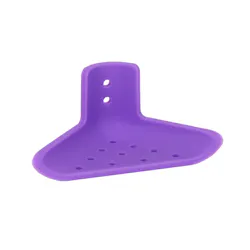
Q: “Are there products that can help with holes in our wrapped trays?”
A:
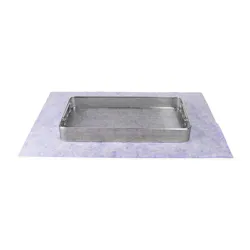
In addition to the aforementioned “savior of wet steam,” the corner protector (Fig. 2), I am a big fan of under tray liners (Fig. 3). Liners help to wick moisture from our wrapped trays by soaking up the moisture during steam sterilization, which makes it easier to dry them (usually a paper product) than it will be to dry the inside or underside of a plastic or metal tray.
These liners help create another barrier under the tray, making it less likely that holes or tears will appear, especially with trays that have sharp edges. Every little bit helps, and bonus, these liners can help with wet packs!
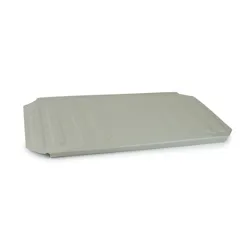
In addition to under tray liners, you can also try shelf liners (Fig. 4) for your autoclave rack. Most holes and tears come from dragging a wrapped tray across a metal shelf, so autoclave rack liners can really assist with preventing issues when placing trays on or removing them from the rack.
And last, but not least!
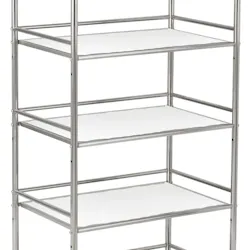
3. Try shelf liners (Fig. 5) for your sterile storage areas.
The metal racks in our sterile storage areas can be of varying quality, and I’ve seen more than a few in my day that had sharp edges, burrs, or imperfections in the metal that could easily tear through the fibrous sterile wrap.
All these solutions are relatively inexpensive and can really help reduce the number of holes in wrapped trays!
References:
1. Okada, A. (2026). [image]. Hole/Tear in wrap.
2. Okada, A. (2024, December 24). Wet loads. Healthcare Purchasing News. https://www.hpnonline.com/sterile-processing/article/55246796/wet-loads
3. Okada, A. (2025, December 23). Wet packs. Healthcare Purchasing News. https://www.hpnonline.com/sterile-processing/article/55333299/wet-packs
4. Healthmark Industries. (2025, May 13). [image]. Silicone Corner Hugs - Healthmark, A Getinge company. Healthmark, a Getinge Company. https://www.hmark.com/product/silicone-tray-corners/
5. Healthmark Industries. (2024, October 9). [image]. Dual UnderGuardTM Dry Mats - Healthmark, A Getinge company. Healthmark, a Getinge Company. https://www.hmark.com/product/dual-underguard-tough-and-absorbent/
6. Healthmark Industries. (2024, June 2). [image]. UnderGuardTM for Autoclave Shelves - Healthmark, A Getinge company. Healthmark, a Getinge Company. https://www.hmark.com/product/underguard-for-autoclave-shelves/
7. Healthmark Industries. (2025, May 29). [image]. TearGuard Shelf Liner - Healthmark, A Getinge company. Healthmark, a Getinge Company. https://www.hmark.com/product/tearguard-plastic-shelfliner/
About the Author
 Adam Okada
Adam Okada
Clinical Education Specialist, Healthmark, a Getinge company
Adam Okada has 18+ years of experience in Sterile Processing and is passionate about helping improve the quality of patient care by giving SPD professionals and their partners greater access to education and information. He has worked in just about every position in the Sterile Processing Department, including Case Cart Builder, SPD Tech I, II, and III, Lead Tech, Tracking System Analyst, Supervisor of both SPD and HLD, Manager, and now as an Educator. Adam is the owner of Sterile Education, the world’s first mobile application dedicated to sterile processing education, and a former Clinical Manager at Beyond Clean. He has published articles for HSPA’s Process magazine, is a co-chair on AAMI WG45 as well as co-project manager for the KiiP “Last 100 Yards” group, and is the former President for the Central California Chapter of HSPA. Adam is currently a Clinical Education Specialist at Healthmark, A Getinge company, where he works on Healthmark webinars, hybrid events, and educational videos, as well as the "Ask the Educator" Podcast with Kevin Anderson.