Proper PPE/Gown Protection in Decontamination
Key Highlights
- Proper PPE use is mandated by OSHA and ANSI/AAMI standards to protect staff from bloodborne pathogens and bodily fluids.
- Discomfort from PPE, especially gowns and masks, often leads to improper wear; lighter, breathable gowns and cooling devices can mitigate this issue.
- Upgrading to high-quality face shields with neck covers and foam nose guards helps prevent droplet splashes and hot breath issues.
- Choosing PPE designed specifically for sterile processing tasks enhances both safety and comfort, encouraging compliance.
- Implementing cooling technology like vests and caps can significantly reduce sweating and fatigue during long decontamination shifts.
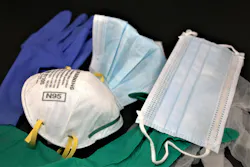
Q: “I have an employee who refuses to wear a complete set of PPE or wears it incorrectly (mask under chin). How do I get them to comply with our department rules on PPE?”
A:
When I am in sterile processing departments, the most common non-compliance issue that I see is that employees do not wear personal protective equipment (PPE) properly. Whether it’s masks under the chin or face shields pulled down, workers in the decontamination area continually seem to ignore proper safety protocols.
Let’s dive into the reasons behind this non-compliance and see if we can’t help you with this problem.
I worked on the “front line” of sterile processing for over a decade before moving into leadership and educator roles. During that time, I also worked on all three shifts—morning, PMs, and nights. It was my time on the PM shift at a trauma hospital where I worked the longest (over 5 years), and this was also where I logged the majority of my hours at the sink in the decontamination area.
On the PM shift, the carts start coming down around 11 am, and they don’t stop until late into the evening, so the PM shift often receives the brunt of the sink work. I’m sure I caused significant damage to my back hunching over those sinks before we acquired modern-day, ergonomic adjustable-height sinks.
These kids today won’t understand the struggle. Now that my “old man shaking his fist at the sky” moment is over, we can return the point of this article.
Why do intelligent, mostly rule-following sterile processing professionals continually shirk rules about PPE?
The answer really has to do with how uncomfortable and unnatural it is for a person to put in 8 hours hunched over a sink full of hot water, with machines running hot all around them, while also wearing layers and layers of PPE.
I’ve been there. After 2−3 hours of meticulous brushing and cleaning at the sink, you’re drenched in sweat. I used to peel my plastic gown off my sweaty arms. I remember sweat dripping into my eyes while trying to figure out creative ways to wipe it away so that I could see what I was doing. Personal protective equipment was designed for protection, not for comfort. So I understand the desire to cool off however you can.
In addition to seeing how many times I can work the word “sweat” into this article, I do also want to provide some clarification.
First, personal protective equipment is not optional. It is an Occupational Safety and Health Administration (OSHA) Bloodborne Pathogens Standard1 requirement. We are potentially being exposed to dangerous pathogens in the decontamination area, and our PPE is the protective layer that stands between us and possible infections. Employers must provide complete, adequate PPE for their employees, and as employees, it’s our responsibility to wear that PPE when potentially being exposed to blood and other body fluids. The American National Standards Institute (ANSI) and the Association for the Advancement of Medical Instrumentation (AAMI) ANSI/AAMI PB702 also recommends, at minimum, to wear an AAMI Level 3 protective gown.
There’s the first dilemma. On one hand, we must wear full PPE. It’s non-optional, and the last thing we want to do is to expose ourselves (and potentially our co-workers and families) to any pathogens we might bring back from the decontamination area. But I fully acknowledge that most of our PPE was not made with the comfort of the sterile processing professional in mind. Finding solutions to this problem can be tricky, but if you are a leader, or even a technician who is tired of leaving decontamination so drenched in sweat that it looks like you took a shower in your hospital scrubs, it’s imperative that we try.
Let’s look at the largest piece of PPE—the gown—and its role as the most common source of overheating. Earlier, I mentioned the plastic gowns we wore in the past. I still cringe when I see these gowns in modern departments. They do offer protection but do not breathe very well, making them uncomfortable for extended wear. The AAMI Level 3 protective gown is a lighter, more breathable alternative. According to the Level 3 gown's description, it is designed to protect against droplets, such as those a nurse might encounter at a patient's bedside when the patient sneezes.
For those unfamiliar with the sterile processing department decontamination area, techs at the sink are not getting tiny droplets of water coming their way. They are getting big splashes and sprays. Even if a worker isn’t leaving decontam drenched in sweat, like I used to do, I see them remove the AAMI Level 3 gowns with a stomach wet with dirty sink water that has soaked through those thin gowns.
Here is another dilemma we might be faced with in sterile processing. Choose a more protective, heavy plastic gown that doesn’t breathe but better protects us. Or opt for a lighter alternative that provides better cooling but isn’t designed for the unique challenges a sterile processing professional faces at the sink.
Fortunately, there are gowns on the market attempting to combine the best of both worlds, and they are designed for the specific trials of sterile processing technicians performing decontamination tasks.
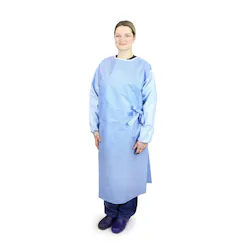
AAMI Level 4 gowns (Fig. 1) provide one level over the minimum standard set by AAMI PB70.2 Some of them even have protective zones to prevent soak-through in the critical areas where our stomachs are pressed right against the sink. These lightweight gowns aren’t as heavy as their older “plastic-y” counterparts. They give better cooling and better protection in the critical areas.
Next, let’s look at the mask and face shield issue. As gross as it might seem, this is usually a “hot breath” issue. When we are breathing into our face masks, hot breath tends to make us feel overheated or claustrophobic. Add in the factors of gown and face shields, and it’s easy to see why so many techs opt to “pull down” their masks below their chins. The major problem with this is that most of the face shields on the market don’t cover the area under the chin. Therefore, when splashing occurs, even droplet splashing, those droplets might go right under the face shield and into our uncovered mouths! See, I told you it was gross!
There are two potential solutions to this issue.
First, I would highly recommend a higher quality face shield with a foam nose cover. These avoid the issue of hot breath coming up from the mask into the eyes and face shield areas. If the hot breath can be contained in the mask area, it is easier to tolerate.
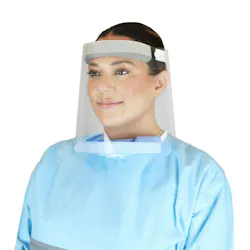
Second, I would also recommend a face shield with an attached neck covering (Fig. 2). Those splashes can be nasty, and we won’t always be able to see or tell when they come under the neck area opening of our face shields. Face shields with neck covers can help mitigate those issues.
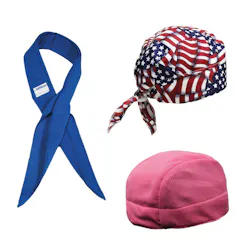
And my last piece of advice is to invest in cooling technology. There are refrigerated “cooling devices” that can go under the PPE and really help with the sweating issues. As a manager, I bought cooling caps and vests (Fig. 3) for my staff, and they loved them and raved about how cool they stayed while performing cleaning duties. Sadly, I didn’t get the chance to experience them as they arrived just after my time at the sink had ended.
These kids today have it so easy! (Author shakes fist at sky.)
References:
-
Occupational Safety and Health Administration. Code of Federal Regulations: Occupational Exposure to Bloodborne Pathogens. Title 29 [Bloodborne pathogens], Standard No. 1910.1030. United States Dept of Labor/OSHA. https://www.osha.gov/laws-regs/regulations/standardnumber/1910/1910.1030
-
AAMI (2022). PB70:2022 Liquid barrier performance and classification of protective apparel and drapes intended for use in health care facilities. Arlington, VA: Association for the Advancement of Medical Instrumentation.
-
Healthmark Industries. [image]. AAMI Level 4 Decontamination Gown - Healthmark, A Getinge company. Healthmark, a Getinge Company. https://www.hmark.com/product/aami-level-4-decontamination-gown/
-
Healthmark Industries. [image]. Face Shield with Drape - Healthmark, A Getinge company. Healthmark, a Getinge Company. https://www.hmark.com/product/face-shield-with-drape/
-
Healthmark Industries. [image]. Cool Aids - Healthmark, A Getinge company. Healthmark, a Getinge Company. https://www.hmark.com/product/cool-aids/
About the Author
 Adam Okada
Adam Okada
Clinical Education Specialist, Healthmark, a Getinge company
Adam Okada has 18+ years of experience in Sterile Processing and is passionate about helping improve the quality of patient care by giving SPD professionals and their partners greater access to education and information. He has worked in just about every position in the Sterile Processing Department, including Case Cart Builder, SPD Tech I, II, and III, Lead Tech, Tracking System Analyst, Supervisor of both SPD and HLD, Manager, and now as an Educator. Adam is the owner of Sterile Education, the world’s first mobile application dedicated to sterile processing education, and a former Clinical Manager at Beyond Clean. He has published articles for HSPA’s Process magazine, is a co-chair on AAMI WG45 as well as co-project manager for the KiiP “Last 100 Yards” group, and is the former President for the Central California Chapter of HSPA. Adam is currently a Clinical Education Specialist at Healthmark, A Getinge company, where he works on Healthmark webinars, hybrid events, and educational videos, as well as the "Ask the Educator" Podcast with Kevin Anderson.