Before the First Incision: Why Standardizing OR Setup is a Leadership Priority
Key Highlights
- Standardized case setup is crucial for improving OR efficiency, patient flow, and reducing delays caused by variability in preparation practices.
- Consistent workflows and shared knowledge systems help mitigate the challenges posed by technological complexity and staff turnover.
- Access to clear, current guidance at the point of care enhances staff confidence, reduces cognitive load, and promotes safety and accuracy.
- Optimizing supply logistics and preference cards through standardization can lead to substantial cost savings and waste reduction.
- Familiarity and dedicated teams improve performance, but process standardization offers benefits even amid staffing variability and technological evolution.

Standardization has long been central to improving efficiency and patient outcomes in the operating room (OR). Established practices such as safety checklists, enhanced recovery protocols, and parallel processing have helped perioperative teams apply lean management and high reliability principles in increasingly complex environments.
As pressure mounts to improve quality, throughput, and value, perioperative leaders are turning their attention to one of the largest remaining opportunities for standardization: how surgical cases are prepared and ORs are set up.
Even within a single facility, variation in case setup and related costs can be significant. One pediatric hospital reported a 758% difference in supply costs among surgeons performing tonsillectomy and adenoidectomy, even after researchers adjusted for case mix and surgeon characteristics.1
At the same time, rapid advances in surgical technology and the growing use of procedure-specific equipment have made consistent setup more difficult. Robotic platforms, navigation systems, and advanced implants add layers of complexity, requiring teams to coordinate specialized preparation and turnover workflows across surgeons and service lines.
In interviews with perioperative leaders and surgeons, even small variations in setup were linked to some of the most consequential challenges facing today’s ORs, including patient flow, throughput, operational predictability, staffing flexibility, and supply costs.
“Room setup starts everything”
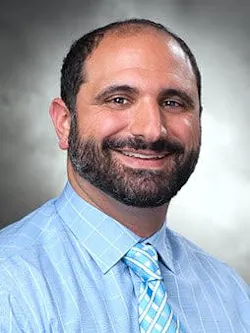
For Dr. Sarkis Bedikian, an orthopedic surgeon specializing in total joint and revision procedures, a successful case begins well before the first incision.
“I’d say if the room is set up optimally, that’s 50% right there,” Bedikian said. In his experience, case setup is one of the strongest determinants of how efficiently the day unfolds.
“An efficient OR, from my point of view, is one that’s literally ready to go,” he said. “A surgeon’s definition of ready means no stone left unturned. If there is, the day’s going to start with delays, plain and simple.”
In high-volume environments, even minor disruptions can cascade across the schedule and become harder to recover from with each subsequent case.
“Even a slight delay in setup impacts the whole list,” Bedikian said. “The procedure itself may not change much, but anticipation, having everything ready, and keeping patient flow moving all affect how efficiently the room functions. And if you have a large caseload—say eight to 10 cases—this can easily delay the whole day.”
Published evidence reflects the same operational pattern. In elective spinal surgery, researchers found that upstream overruns from earlier cases accounted for nearly half of all subsequent delayed starts. Non-first cases were substantially more likely than first cases to be delayed—86% versus 24%.2
For perioperative leaders, the broader issue is predictability. Case setup is a fundamental driver of patient flow, yet its impact is often unrecognized and unmeasured. Connecting setup practices to metrics such as first-case on-time starts, subsequent-case starts, and turnover times can help leaders quantify variation, identify recurring problems, and prioritize improvements that directly affect capacity and throughput.

“Predictability drives performance”
“Reducing delays in setup and turnovers all translates to more case volume with the same amount of infrastructure,” said Robert W. Nappo, AVP of perioperative services at UF Health Shands in Florida. “If we do things consistently, that leads to more efficient utilization of time and supplies, and also better outcomes for our patients.”
With more than three decades of leadership experience, Nappo views standardization as one of the clearest opportunities to improve OR efficiency and resource utilization.
“Our main focus right now is to identify ways where we can optimize workflow and standardize our processes in the OR,” he said. “If we standardize, then we can improve our supply logistics, which is a big deal. And if we optimize that, it helps us enormously with our supply spend.”
Using standardization to reduce supply expense is a well-established strategy. Surgeon preference card optimization has been shown to reduce waste and reprocessing burdens while improving purchasing efficiency.
Researchers at a large, multi-hospital health system identified a mean cost of $1,294 per case for unused preference card items across three major service lines. Targeted preference card optimization reduced those costs, with the largest improvement in colorectal surgery, where the initiative generated $489,000 in savings—a 55.8% relative reduction.3 A systematic review found that optimization initiatives safely removed between 19% and 89% of instruments from surgical setups without affecting clinical outcomes.4
Maintaining standardized setup practices, however, becomes more difficult as technology evolves. Modern setups are often highly case-specific and may include modular components, calibration equipment, and device-specific accessories in addition to standard instrument sets.
“Every day something new appears or comes into the market,” Nappo said. “A process, product, or technology evolves. That lack of predictability is what causes so much confusion for teams and staff.”

“A single source of truth”
For Nappo and Michele Brunges, director of surgical services at UF Health, consistent case setup increasingly depends on reliable current workflow guidance.
“My number one challenge is inconsistent and fragmented information,” Brunges said. “How do we get that one single source of truth that’s the same for everyone?”
At a large academic referral center, where teams must continuously integrate new technology and workflows, maintaining consistency is particularly difficult.
“We have 17 different services here,” Brunges said. “To become an expert in all of those is just mind boggling for staff.”
“We want to have continuous improvement, but we also want consistency and repetition, right?” Nappo added. “So those two things are kind of contradictory.”
One way to address that tension is to place setup knowledge in shared systems rather than allow it to reside primarily with individual staff members.
“If you can take all of the knowledge of your best trained individuals and put it into a system where employees can go and find answers that are clear and consistent, then you create a much more standardized workflow,” Nappo said. Ultimately, he added, “the knowledge needs to live in the system.”
Brunges sees the same approach as essential to orientation and cross-training.
“You need a centralized source of information so that, whether someone is training with one preceptor or another, that information is communicated consistently,” she said. “And if you don’t do a case that often, that’s really where you rely on your tools.”

“This is our SOP, and this is why”
For Ricardo Ramirez, chief operating officer at Tenet Healthcare, consistency in OR setup depends as much on people as it does on processes.
“The hallmark of a great team is knowing what’s coming next,” Ramirez said. “If you’ve worked with the same surgeon for a long time, you’re anticipating their next move. That comes from familiarity and shared understanding.”
His observation reflects the documented benefits of familiar or dedicated OR teams, whose members consistently work together across similar procedures. Research has found that greater staff familiarity predicts better teamwork and improved operational performance, including shorter operative times and faster turnovers.5
Workforce shortages, turnover, and variable staffing, however, can make stable team structures difficult to maintain. Increasingly, leaders are using standardization to capture some of the same benefits across changing team configurations.
“Everybody does things slightly differently,” Ramirez said. “But there are opportunities to have a core of, okay, this is our SOP, and this is why it’s our SOP.”
Standardization can serve as a practical complement to staffing-based approaches when it is consistently implemented. A recent study found that standardized protocols alone reduced surgical time, analgesia requirements, and overall OR costs compared with a dedicated specialty team in pediatric spinal surgery. The findings suggest that standardized processes may deliver many of the benefits traditionally associated with familiar teams.6
For Ramirez, process standardization is not intended to replace experience. It is a way to make expertise accessible to every team. That requires clear ownership of service-line knowledge, protocols, and standards.
“We have leads by service line to help maintain our knowledge content and protocols,” he said. “They’re really experts in that service to make sure everything’s set up correctly—education, training, preference cards, the works. They take ownership, and that structure really helps.”

“If it’s hard to find, staff tend not to use it”
Christina Gravalese, director of perioperative services at Detroit Medical Center, sees many of these challenges converging around a single issue: making workflow guidance available where and when staff need it.
“The challenge often with introducing standardized processes is access,” she said. “If it’s hard to get to or hard to find, staff tend not to use it.”
Gravalese oversees 35 ORs and sterile processing operations across multiple hospitals. She views easy access to standardized guidance as essential to helping staff work confidently and consistently across sites.
“We’ve got a lot of new people, a lot of young people,” she said. “There’s a lot of pressure to get employees productive quickly, but at the same time we need them to be safe and confident in their roles.”
That support depends on giving staff the right information at the point of need, particularly during case preparation. Ready access to standardized guidance can also reduce cognitive burden, allowing teams to concentrate on safe, efficient patient care rather than searching for information or relying on memory.
“Obviously the ideal is to have everything set up on time, everything that is needed opened, and everything there’s a high likelihood they might need available,” Gravalese said. “And that staff know the difference between those. Some items cost thousands and thousands of dollars. … I had one of my neurosurgeons recently come to me and say, ‘Tina, those items are so expensive, and I use them a fraction of the time, but I always see them opened.’”
The financial impact of this type of setup waste can be substantial. One neurosurgical department reported an average of $968 per case in wasted disposable supplies, driven largely by unused dural sealants and hemostatic products.7
Updating preference cards may remove unnecessary supplies on paper, but health systems realize savings only when teams can easily access and consistently follow the resulting setup guidance.
“If we want staff to use it, we’ve really got to make it easy for them,” Gravalese said. “Most importantly, we’ve got to make it accessible.”
As surgical technology advances and preparation workflows become more specialized, OR setup is becoming a strategic operational capability. Success depends on keeping setup guidance current, making it readily accessible, and ensuring teams apply it consistently. Done well, standardization can support safer, more efficient, and more predictable preparation across every case.
References
-
Acker, S., Kaar, J., & Prendergast, C. (2023). Variation in cost of disposable operating room supplies at a children’s hospital. Journal of Pediatric Surgery, 58(3), 518–523. https://pubmed.ncbi.nlm.nih.gov/35973858/
-
Inzerillo, S., Jagtiani, P., & Jones, S. (2025). What factors contribute to delays in first versus non-first case operating room starts for patients undergoing elective anterior cervical discectomy and fusion? Surgical Neurology International, 16, 458. https://pubmed.ncbi.nlm.nih.gov/41220697/
-
Perez, S., Mancebo, A., Jr., Lopez, P., Joe, L., Benavidez, P., Li, Z., Sadri, M., Spiegel-Pinzon, E., Lopez, R., Clary, B., Longhurst, C. A., Mekeel, K., & Singh, K. (2026). Data and the art of surgical preference card maintenance. JAMA Surgery, 161(1), 76–82. https://pubmed.ncbi.nlm.nih.gov/41296367/
-
Eussen, M. M. M., Logghe, E., Bluiminck, S., Comes, D. J., Kimman, M. L., Essers, B. A. B., Wellens, L. M., Kruijff, S., de Reuver, P. R., & Bouvy, N. D. (2025). Reducing surgical instrument usage: Systematic review of approaches for tray optimization and its advantages on environmental impact, costs and efficiency. BJS Open, 9(3). https://pubmed.ncbi.nlm.nih.gov/40380812/
-
Witmer, H. D. D., Dhiman, A., Jones, A. D., Laffan, A. M., Adelman, D., & Turaga, K. K. (2022). A systematic review of operative team familiarity on metrics of efficiency, patient outcomes, cost, and team satisfaction. Annals of Surgery, 276(6), e674–e681. https://pubmed.ncbi.nlm.nih.gov/35815890/
-
Sarwahi, V., Rahman, E., Eigo, K., Mahmoud, T., Trent, S., Lo, Y., DiMauro, J. P., & Amaral, T. (2025). The impact of standardized operating room process versus dedicated team on outcomes in pediatric spinal deformity surgery. Spine, 50(22), 1605–1610. https://pubmed.ncbi.nlm.nih.gov/40195698/
-
Zygourakis, C. C., Yoon, S., Valencia, V., Boscardin, C., Moriates, C., Gonzales, R., & Lawton, M. T. (2017). Operating room waste: Disposable supply utilization in neurosurgical procedures. Journal of Neurosurgery, 126(2), 620–625. https://doi.org/10.3171/2016.2.JNS152442
Eight Leadership Priorities for Standardizing OR Setup
- Connect setup to organizational performance. Case preparation affects throughput, supply expense, and staffing flexibility. Treat setup standardization as an operational capability that can improve OR performance and patient outcomes.
- Make variation visible. Analyze surgeon preference cards, supply utilization, supply spend, on-time starts, and turnover times. Use the findings to identify patterns and prioritize opportunities across surgeons, service lines, and sites.
- Establish a single source of truth. Centralize surgeon preferences, pick lists, team protocols, and case-specific preparation guidance in a resource that can be readily maintained as procedures and technologies change.
- Look beyond the preference card. Connect supply preferences with the broader instructions teams use during case preparation, including robot docking, implant assembly, device calibration, patient positioning, draping, and anesthesia workflows.
- Provide information at the point of need. Reduce cognitive burden by ensuring teams can quickly access standardized guidance, regardless of specialty, facility, or staffing configuration.
- Control what gets opened. Clearly distinguish between items that should be opened routinely and those that should remain available but unopened until needed. Consider placing low-use products on hold lists before making permanent changes. Review preference cards and hold lists regularly to prevent the gradual accumulation of supplies and costs.
- Design for staffing flexibility. Build setup guidance and surgeon-specific workflows into resources that support orientation, float staff, cross-site coverage, and changing team compositions.
- Assign ownership and accountability. Designate service-line leaders to maintain preparation workflows, protocols, knowledge resources, and technology standards.
About the Author
Thomas Needs
Dr. Thomas Needs, MBBS, Creative Director, Incision. Incision Assist is a digital knowledge platform that helps perioperative teams prepare for surgical cases, surgeon preferences, and patient needs.