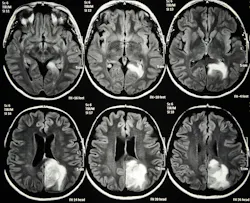
Researchers at the University of Virginia Comprehensive Cancer Center have developed a new approach to targeting glioblastoma, the most common and deadly brain cancer.
The scientists identified “microRNAs” that suppress multiple malfunctioning genes responsible for glioblastoma’s formation and growth. They then used brain penetrating nanoparticles, focused ultrasound waves, and microbubbles to deliver those miRNAs through the brain’s protective barrier. This could “help target numerous molecules that promote cancer growth,” according to one of the researchers.
Glioblastoma kills more than 13,000 people annually in America. The tumors thread their way through healthy brain tissue, making them extremely hard to remove. The blood-brain barrier also keeps out anti-tumor drugs in its efforts to protect the brain from infections and toxins, making it even more difficult to treat. A typical treatment track involves surgery to remove as much as possible, and then using radiation and chemotherapy to help the patient survive as long as they can.
miRNA lets doctors suppress the effects of multiple faulty genes at once. In theory, this would slow or stop tumor growth by blocking those genes driving the cancer. The miRNA would be directed to the brain by using ultrasound guided by MRI to open the blood-brain barrier for long enough to let the carriers through. The method was effective at slowing tumor growth and extending survival in animal models.